
The fastest enterprise projects I have shipped were never the ones with the loudest kickoff decks. They were the ones where we stopped pretending that adding individual contractors to a broken structure would magically make the structure healthy.
That is the mistake I keep seeing. Companies buy capacity one role at a time, then expect speed from an arrangement that creates more meetings, more translation, and more ownership gaps. A pod changes the unit of delivery. You are not borrowing heads. You are placing a complete execution cell next to the product problem.
When we run staff augmentation as a pod, we do it with the same discipline we use on our own systems: clear boundaries, explicit interfaces, one place for decisions, and enough cross-functional coverage to move without waiting for permission every hour. That is why the model works. It reduces the number of times work has to cross a seam.
Most enterprise software does not fail because nobody can code. It fails because the work is fragmented across too many people who each own a tiny slice. The backend engineer waits on product. Product waits on design. Design waits on compliance. QA waits on a build. DevOps waits on a ticket. Nobody is actually responsible for the whole thing moving.
A pod fixes that by designing for flow. A strong pod usually includes the roles needed to take a feature from definition to production without assembling a committee for every change. I am not saying every pod needs the same shape. I am saying the unit must be complete enough to carry real work, not just perform it in fragments.
That distinction matters more than people admit. I have seen teams call themselves agile while every decision still required a chain of approvals. We once spent more time untangling a release process than building the release itself. The surprise was not technical. The surprise was organizational: the team had talent, but not enough autonomy at the point of work.
## What a pod actually does differently
A staff augmentation pod accelerates delivery in three practical ways:
- It collapses coordination cost. The engineer, QA, and delivery lead are not operating as isolated vendors. They are aligned around one backlog, one cadence, and one definition of done.
- It preserves context. Requirements do not have to be re-explained to five separate people every time the ticket moves. The pod carries the memory of the project.
- It shortens feedback loops. Bugs, integration issues, and edge cases surface earlier because the people building the thing are also closer to the checks that verify it.
This is where the pod model beats classic body-shopping. Body-shopping sells capacity. Pods sell throughput. That sounds like a semantic difference until you are the one trying to launch a feature with three vendors, two internal teams, and one security review waiting in the wings.
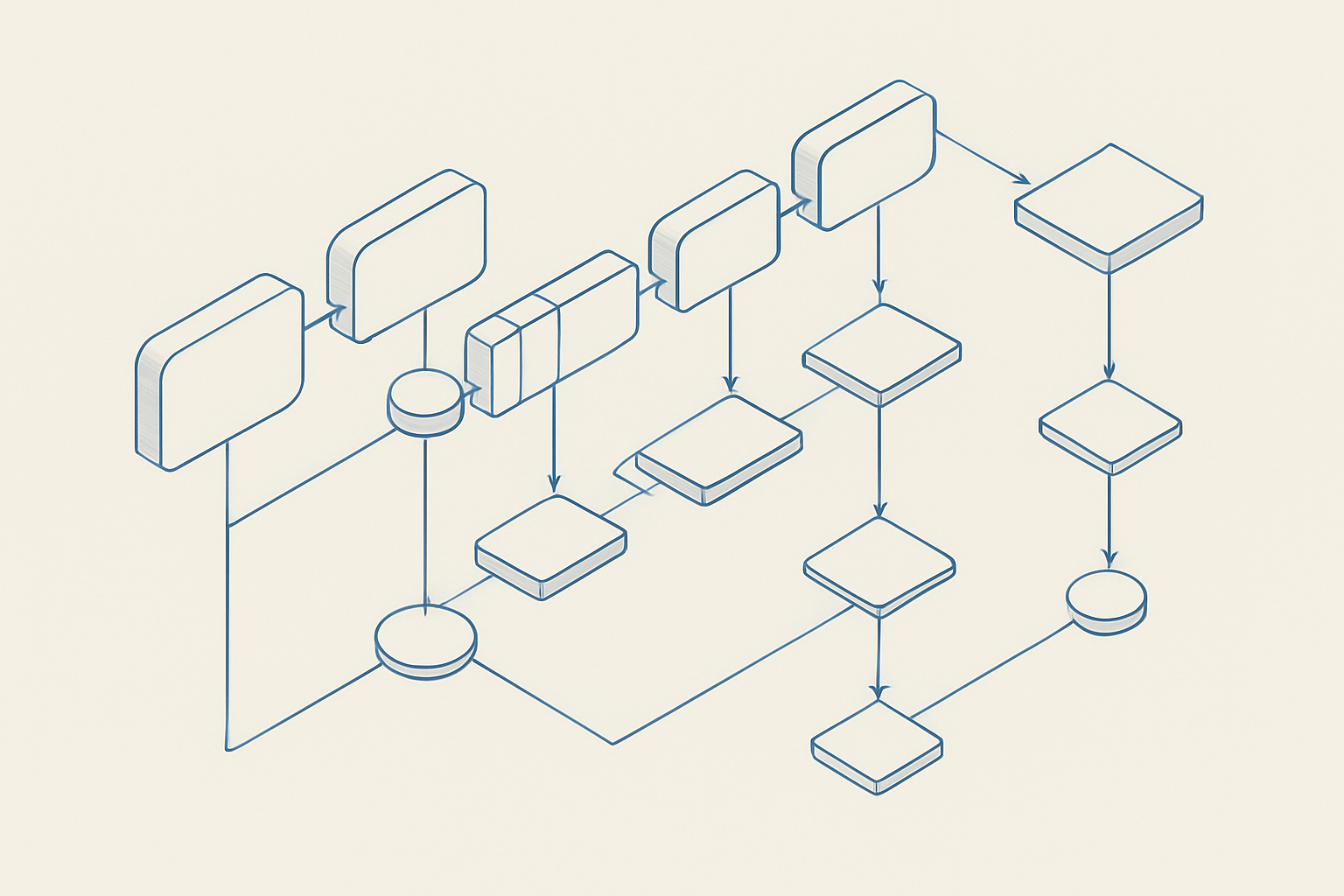
Enterprise software delivery lives or dies on seam quality. Seam quality means how cleanly your code, decisions, and approvals cross from one function to another. Most delays are seam delays. Pods lower them because fewer handoffs means fewer interpretations, and fewer interpretations means fewer rewrites.
That is why I push back when someone asks for a pod but then wants to manage every contributor individually. That arrangement takes the worst parts of staff augmentation and keeps them. If the client wants to interview every person, assign every task separately, and approve every micro-decision through a chain, they do not want a pod. They want a rented org chart.
And rented org charts are slow.
## Why pods outperform piecemeal staffing
Here is the counterintuitive part: adding a stronger individual to a weak delivery system often slows the overall team down. Not because the person is weak. Because the system absorbs their effort through friction. They spend their time learning the organizational maze, waiting on approvals, and compensating for missing context.
The pod model avoids that trap by making the team shape part of the solution. The product lead does not have to invent a coordination ritual. The pod already has one. The QA engineer is not waiting for a release manager to translate what changed. They are already in the same operating loop.
When AST builds pods, we treat them as integrated engineering pods, not loose staffing pools. That means we care about how the work moves, not just who is available. It also means we can tune the pod to the delivery stage. Early discovery needs different muscle than a hardening phase before launch.
Two things have consistently surprised clients:
- They underestimated the cost of handoffs. Everyone sees the development work. Few people track the hidden time spent aligning, clarifying, redoing, and verifying.
- They underestimated the value of shared context. When the same pod members stay with the product slice, their judgment improves because they have seen the failure modes before.
That last point matters. A pod gets faster over time if it is allowed to stay close to the same problem space. The team stops relearning the same lessons. They know which integration always breaks, which approval usually slips, and which edge case always appears in UAT.
At AST, we have learned this in real delivery, not in a slide deck. In one engagement, the technical work was straightforward, but the release path kept breaking because the client’s internal groups were each treating the project as someone else’s responsibility. The pod did not just write code. It became the coordination layer that made the release executable.
## When a pod is the right move
I do not recommend pods because they sound modern. I recommend them when the delivery problem needs speed, continuity, and ownership more than it needs raw headcount. If your system already has strong product management and a tight engineering culture, a pod can plug in and move. If your system is fragmented, a pod can become the structure that makes progress possible.
Use the pod model when you have any of these conditions:
- Your backlog is blocked by too many cross-functional dependencies.
- The internal team is overloaded but still expected to ship without losing quality.
- You need delivery continuity across more than one sprint or release window.
- The work touches multiple systems and requires people who can stay aligned on integration details.
- You cannot afford a long ramp-up every time a contractor rotates out.
Do not use a pod as a workaround for bad product ownership. If nobody can explain what should be built, no staffing model will save you. Pods accelerate execution. They do not invent strategy.
One thing I have learned the hard way: clients sometimes ask for a pod but only want it to touch coding. That is backwards. Coding is rarely the bottleneck. The bottleneck is usually review, test, integration, deployment, and decision latency. If the pod cannot participate in those steps, it will still be stuck in the same queue as everyone else.
This is why AST’s integrated pod approach is different from simple staff augmentation. We do not drop people into a vacuum and hope the client’s process carries them. We work the process. We look at ticket flow, review gates, defect escape points, and release ownership. Then we shape the pod around the actual friction.
If you want the broader engineering context behind that approach, I have written before about integration work and how much delivery time gets lost at the boundaries between systems. The same lesson applies here. Delivery speed is an architecture problem as much as it is a staffing problem.
## A practical playbook for the next 30 days
If you are considering pods, do this in order this week:
- Map the bottlenecks. List the three places where work sits the longest: requirements, build, QA, security review, release, or support handoff.
- Define the pod outcome. Do not define titles first. Define what must move faster, what quality gate must hold, and what the release cadence needs to be.
- Choose one product slice. Start with a contained workflow, not the entire roadmap. Pods prove themselves in a bounded lane.
- Assign one delivery owner. Make sure one person owns flow across roles, handoffs, and release readiness.
- Measure rework, not just velocity. If the team is busy but tickets keep returning to the same stage, you have not accelerated anything.
- Keep the same pod together long enough to learn. Rotating people too fast destroys the context premium you paid for.
Notice what is not on that list: a request for more meetings. When pods work, they reduce the number of conversations needed to move the work. The team still communicates, but it does not spend its life translating.
If you are comparing options, here is the cleanest way to think about it:
| Model | Best for | Common failure mode |
|---|---|---|
| Individual contractors | One-off gaps and narrow skill shortages | Context loss and fragmented ownership |
| Traditional augmentation | Short-term capacity lift inside a strong internal team | People become extra hands in a broken workflow |
| Staff augmentation pods | Cross-functional delivery with clear outcomes and tight timelines | Works poorly if the client refuses shared accountability |
That table is the real decision. If you need hands, hire hands. If you need throughput, build a pod.
At AST, we have seen pods work best when the client wants dedicated execution without giving up product ownership. That balance matters. The pod should not replace the internal team. It should extend it with enough shape and continuity to make delivery predictable.
That is the standard I care about. Not whether the team looks busy. Whether the work gets to production with less friction and fewer surprises.
The right pod does not just add people. It changes the shape of delivery.
Make delivery feel smaller, faster, and less chaotic
If your enterprise roadmap keeps stalling at the same seams, a staffed pod can change the system instead of just adding more strain to it. I build these teams to carry real delivery, not to decorate a backlog.

Comments
Comments are warming up. Live, no-sign-in discussion will appear here shortly.
Have a question now? Email info@allstartech.net.