Most edge projects fail for the same reason: somebody starts with infrastructure instead of the business event. I do not care about edge nodes, gateways, or container runtimes until I know what decision must happen in under a second, what data is actually available at the moment of action, and what breaks if the network disappears for five minutes. That is the filter. If the use case does not survive that filter, it does not belong at the edge.
That sounds blunt because it is. We have seen teams overengineer local processing for data that could have waited for a normal cloud pipeline. We have also seen the opposite problem: a real operational decision buried behind a cloud hop, then everyone acts surprised when the system feels sluggish. The hard part is not moving compute outward. The hard part is deciding which data deserves to be processed before it leaves the room, the branch, the device, or the facility.
At AST, I have watched this pattern show up in different forms across enterprise environments. The tech stack changes, but the pressure stays the same: someone wants immediate action, someone else wants a clean system of record, and the network is never as reliable as the diagram promised. The companies that get edge right stop asking whether data should live at the edge forever and start asking what belongs there long enough to make a decision.
What edge computing is actually for
Edge computing is not a vague modernization project. It is a design choice that says some data should be analyzed, filtered, enriched, or acted on close to where it is generated. That usually means near devices, facilities, vehicles, stores, plants, clinics, or branch offices. The point is not novelty. The point is reducing the delay between signal and response.
In real-time enterprise data processing, that delay matters in a few very specific ways:
- Latency: The decision has to happen before the central platform can respond.
- Bandwidth: Raw streams are too noisy or too large to ship continuously.
- Resilience: Local operations must continue when the WAN is slow or down.
- Context: The data only makes sense where it was generated.
- Privacy or policy: Sensitive information should be reduced locally before leaving the site.
If you are doing dashboarding, overnight reporting, or long-horizon analytics, edge is usually the wrong answer. Those workloads like centralized platforms, easier governance, and cleaner observability. Edge earns its place when the business event is immediate and the local context changes the result.
Use cases that belong at the edge
I use a very practical test. If the system needs to react to what is happening right now, edge becomes a candidate. If the system is just collecting evidence for later, it probably does not. The most useful edge patterns I have seen fall into a few buckets.
- Real-time anomaly detection Sensors, machines, security feeds, and operational telemetry can be screened locally for outliers before they flood a central queue. The edge layer does the first pass: threshold checks, pattern matching, suppression of noise, and escalation of only the meaningful exceptions.
- Local workflow triggers When a device state, transaction state, or site condition changes, the edge system can trigger the next action instantly. Think of equipment alerts, store operations, fleet events, or facility-level logic that should not wait for a remote event bus to catch up.
- Store-and-forward during connectivity loss A branch, warehouse, or field unit often needs to keep working when the network is unstable. Edge nodes buffer events, maintain local state, and reconcile back to the central platform when connectivity returns.
- Selective data reduction Instead of streaming every raw event, the edge can compress, aggregate, redact, or classify data in place. That reduces cost and makes the central platform easier to govern.
- Location-aware decisions Some data only becomes useful when paired with local conditions. A temperature reading, badge event, machine state, or site-specific threshold can drive a different decision depending on where it occurs.
That list looks simple until you run it in production. The nasty part is not writing code that works on one node. The nasty part is making sure the same logic behaves consistently across a fleet of nodes that will drift, reconnect, patch at different times, and fail in different ways.
We learned that the hard way on a rollout where the edge logic was technically correct but operationally brittle. We had built for the happy path and ignored what happens when a node comes back online with stale state. The data reconciled eventually, but the local decisioning had already moved on. That mistake taught me a very unglamorous lesson: real-time edge systems live or die by state management, not by inference logic alone.
AST’s rule for deciding what stays local
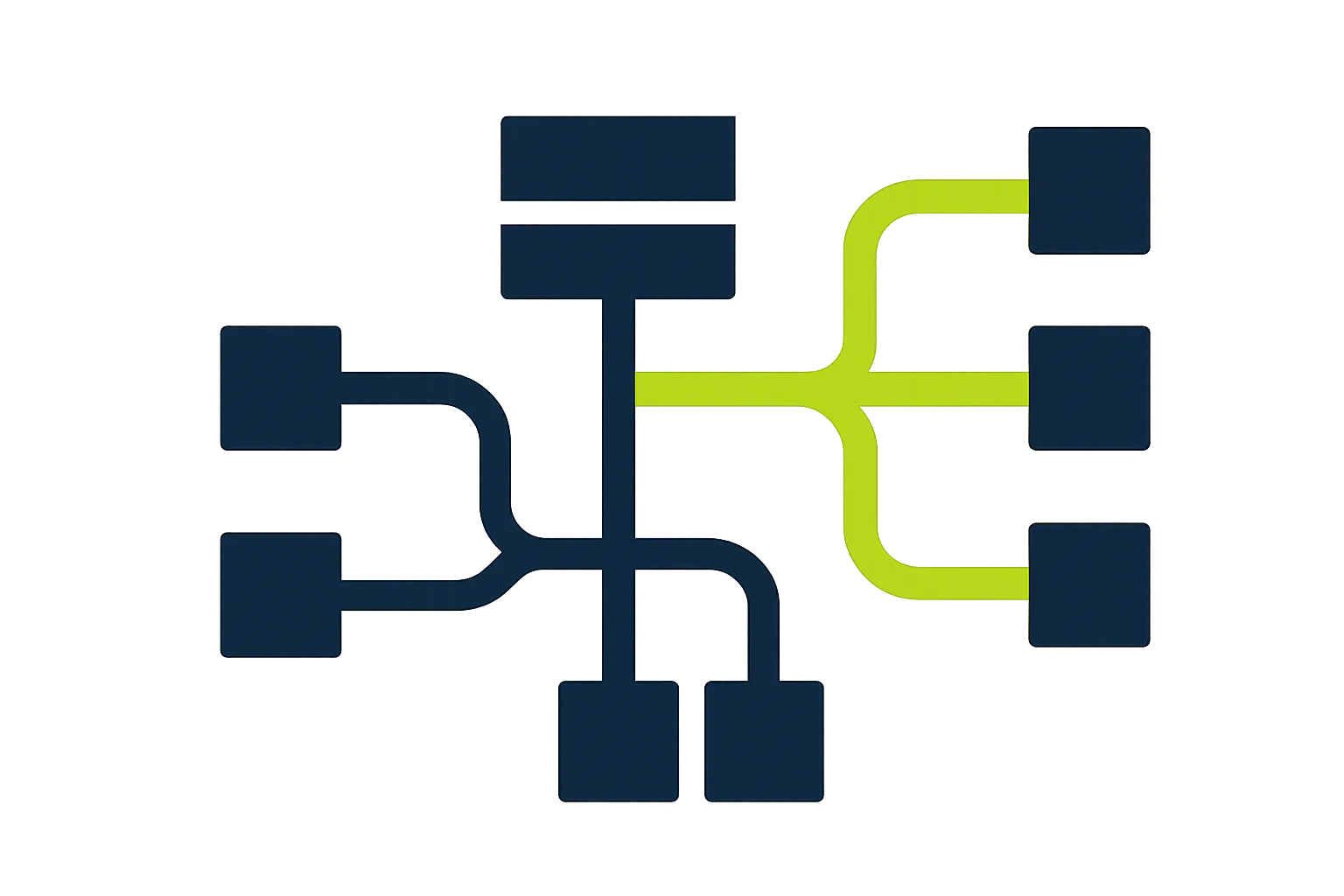
At AST, I push teams to separate three layers: raw event capture, local decisioning, and central truth. The edge should do the minimum work required to keep the business moving. The cloud should do the durable work that benefits from scale, auditability, and cross-system correlation. That is the architecture that survives contact with production.
Here is the practical pattern we repeat:
- Capture locally: Ingest device, sensor, transaction, or workflow events close to the source.
- Decide locally: Apply fast rules, thresholds, and simple models that do not depend on broader enterprise context.
- Persist centrally: Ship curated events, exceptions, and summaries into the core platform for governance and analytics.
This is the same reason I like edge gateways backed by a proper event backbone rather than ad hoc point-to-point calls. The gateway absorbs volatility. The enterprise platform retains control. When the network is healthy, data flows. When it is not, the local node keeps operating and the central system catches up later.
For teams building broader digital operations, this is also where edge pairs naturally with cloud and integration work. The edge handles immediacy. The central platform handles source of truth, historical reporting, and downstream integration. If you want the rest of the design language we use around this, our thinking on enterprise architecture patterns and integration-heavy platforms follows the same split: local action, central durability.
Where edge often gets overbuilt
The most common mistake is turning every site into a mini data center. That is not edge. That is distributed operational debt. The second mistake is wrapping every edge decision in the same heavyweight controls you would use in a central platform. That slows the system down until the whole point disappears.
I watch for these failure modes:
- Too much logic at the edge: Teams migrate too many business rules locally and then have to update them across dozens of nodes.
- Silent drift: Different versions of the edge service produce different decisions because update timing was never controlled.
- Weak observability: The node is doing something useful, but nobody can tell exactly what when the link is down.
- Broken reconciliation: Events arrive later, but the system cannot reliably merge them into the central record.
- Security shortcuts: Local convenience starts overriding identity, key management, and audit requirements.
The last one is the killer. Edge does not excuse weak security. It multiplies the places where poor security shows up. Every node is a copy of your discipline. If your patching is sloppy or your secrets handling is lazy, edge gives that weakness a lot more surface area.
How I scope an edge pilot
If I had to reduce this to a week-one evaluation plan, I would use a short list of questions that force the use case into the right lane.
- Define the event that matters Name the exact business or operational event that needs a local response. If you cannot define that event in one sentence, you are not ready.
- Set the latency threshold Decide what delay is acceptable. Not aspirationally. Operationally. If there is no meaningful delay target, edge may be solving a problem you do not have.
- Identify the local inputs List the data available at the site or device at decision time. If the decision depends on central records, edge may only be useful as a cache, not as the decision engine.
- Separate decision from record Decide what must happen locally and what must be persisted centrally. Never let those responsibilities blur.
- Plan for offline behavior Write down what happens when the network drops, when the node reboots, and when versions differ across sites.
- Design the rollback path If the edge deployment misbehaves, you need a fast way to disable the local decision and keep the business running.
That is the whole practical test. Nothing fancy. Just a ruthless check that the use case really benefits from being close to the source.
Real-time data processing patterns that work
Some edge patterns are genuinely stable because they respect the division of labor between local processing and central systems. The ones I trust most are the ones that do not try to make the edge authoritative for everything.
| Pattern | Best fit | What the edge does | What stays central |
|---|---|---|---|
| Threshold-based alerts | Operations, devices, facilities | Detects immediate exceptions and suppresses noise | Historical analysis, alert tuning, governance |
| Store-and-forward | Branch, field, mobile, remote sites | Buffers events during outages and replays later | Canonical storage, reconciliation, reporting |
| Local enrichment | Retail, logistics, industrial systems | Tags events with site context before sending upstream | Cross-site analytics, master data, policy controls |
| Pre-filtering streams | High-volume telemetry | Removes noise and compresses raw feeds | Model training, long-term storage, enterprise BI |
That table reflects the mental model I push on every architecture review: let the edge make things smaller, faster, or more resilient, but not more mysterious. The minute the local node becomes a black box, you have paid for latency with control.
One more honest point: edge is often easier to justify when a team has already been burned by central bottlenecks. That pain is real, but it should not turn into blanket enthusiasm. I have seen teams use the phrase real-time as a license to duplicate business logic everywhere. The moment that happens, support gets harder, releases slow down, and nobody knows which copy of the rule is authoritative.
If you are building for real-time enterprise processing, start narrow. Pick one decision that genuinely benefits from being local. Prove the offline behavior. Prove the versioning. Prove the handoff back to the central platform. Then expand only where the business case survives those same tests.
That is how edge becomes infrastructure instead of hype.
Turn edge into a real operating layer
If you are trying to decide what belongs at the edge and what belongs in your central platform, I can help you cut through the noise. We build these systems with the operational split in mind: local action, central control, and a clean path back to the enterprise record.



Comments
Comments are warming up. Live, no-sign-in discussion will appear here shortly.
Have a question now? Email info@allstartech.net.