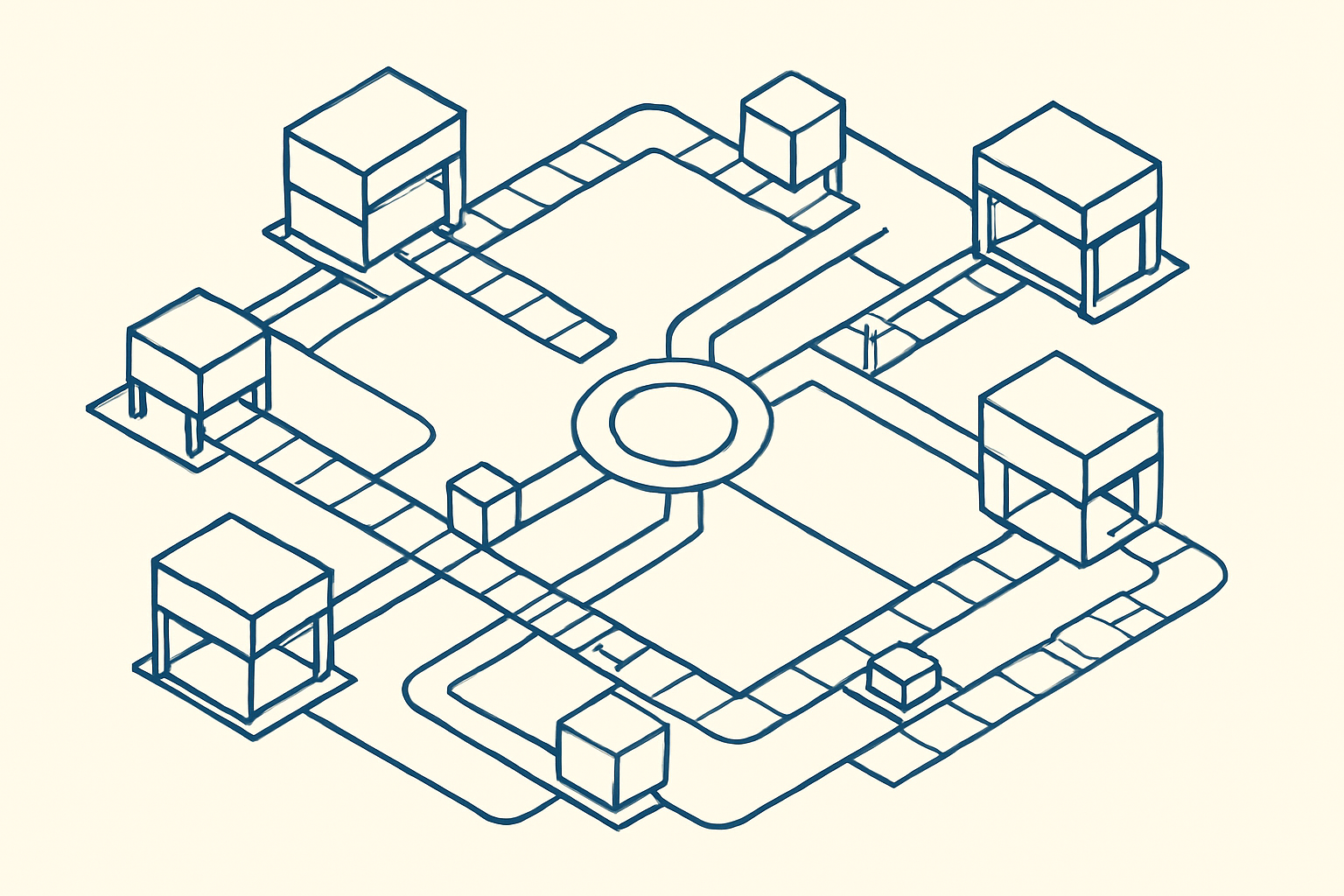
The first mistake I see is treating an offshore pod like a cheaper pair of hands. That is not a delivery model. That is a ticket transfer ceremony with a different time zone.
If you want long-term product development, the pod has to own a real slice of the product, not just sprint leftovers. I mean feature areas with live users, recurring bugs, evolving rules, and enough surface area that the team can build memory. At AST, the pods that last are the ones we can point to and say: this team owns the workflow, the integrations, the edge cases, and the release readiness for that lane. Not just the code. The lane.
The counterintuitive part is this: offshore teams usually fail because the work is too small, not too big. Tiny, fragmented assignments create constant dependency ping-pong. Nobody builds intuition. Nobody learns the shape of the system. By the time the team understands the product, the work has already been sliced somewhere else.
When we build these teams at AST, I start with a blunt question: what can this pod own without asking permission every hour? That answer defines the model better than any org chart. Long-term pods need a boundary that is narrow enough to understand and broad enough to matter.
For healthcare software, that usually means one of three shapes:
- A workflow domain, like intake, eligibility, scheduling, or documentation
- An integration lane, like HL7v2 feeds, FHIR R4 services, or payer connectivity
- A platform surface, like release automation, observability, or environment management
What does not work is a random mix of all three. If the pod owns one screen, three APIs, and a quarterly fire drill, you have engineered chaos. The team will stay busy and still never become better than average.
What I require before I call it a pod
I will not greenlight a long-term offshore pod unless four things are true. These are not nice-to-haves. They are the difference between leverage and churn.
- A clear product slice. The team must own a defined area with visible business impact. That slice needs a backlog that is not constantly torn apart by outside priorities.
- A stable technical surface. The pod cannot be replatforming every month. If the stack is changing underneath them, you are training them to chase moving targets.
- Decision rights inside the pod. The team needs room to resolve implementation details, make tradeoffs, and escalate only when a decision affects architecture, compliance, or release risk.
- A real interface to the core team. Architecture, product direction, and release governance must be synchronized, not isolated. Pods die when they are cut off from the people who understand the business context.
I learned one hard lesson the wrong way: a technically strong offshore team can still underperform if the host organization hoards decisions. We once had a pod that could ship code quickly, but every meaningful change required a separate approval loop. The result was not better control. It was slower learning and lower ownership. The team became excellent at translating uncertainty, which is not the same as building a product.
Trust in this model is not emotional. It is earned through structure. I want review paths that are deterministic, code ownership that is visible, and release criteria that everybody understands before the sprint starts.
How AST structures an offshore pod for staying power
At AST, we do not sell a body shop with a nicer logo. We build dedicated pods that are meant to stay with the product long enough to accumulate judgment. That matters because the real value in long-term development is not raw output. It is context retention.
Here is the shape I prefer:
- Product lead. Owns backlog shape, priorities, and stakeholder alignment
- Tech lead. Owns architecture decisions, code standards, and delivery quality
- Engineers. Own implementation across the pod’s defined surface area
- QA or test support. Builds repeatable verification into the workflow instead of leaving it to the end
- Shared delivery rhythm. Onshore and offshore sync on the same release cadence, not two separate universes
The biggest mistake new clients make is asking for the team structure after asking for velocity. That order is backwards. Velocity comes from how the pod is wired. If you do not define the operating model, you will end up arguing about output while ignoring the machinery that produces it.
We also force a specific communication discipline. Not because meetings are beautiful. Because asynchronous work only works when the artifacts are strong. If tickets are vague, acceptance criteria are loose, and architecture notes live in someone’s head, the time zone gap turns into mistakes. Good offshore delivery is heavily documented because the documentation is the handoff.
You do not need more meetings. You need better objects to hand across the ocean: a clear PRD, a release note draft, a test plan, an actual definition of done, and a documented escalation path. That is what keeps product development coherent when teams are not sitting in the same room.
| Model | What it optimizes | Where it breaks | My view |
|---|---|---|---|
| Ticket-based outsourcing | Low-cost throughput | No ownership, weak context, constant rework | Useful for disposable work, not product development |
| Dedicated offshore pod | Context retention and repeatable delivery | Needs discipline, scope control, and trust design | The right model for long-term product work |
| Hybrid core team plus pod | Shared ownership with elastic capacity | Can fail if decision rights are fuzzy | Best when the core team guards architecture and the pod owns a domain |
One thing I disagree with strongly: the idea that offshore teams should stay narrow forever. That creates dependency by design. If you only let the pod touch one layer, one browser flow, or one set of endpoints, you are not building a team. You are building a permanent junior bench.
The better pattern is controlled expansion. Start with a bounded domain. Let the pod prove it can ship, test, and support the work. Then widen the boundary only after the team has demonstrated reliable judgment. That creates real capability instead of decorative capacity.
What to evaluate in the first 90 days
I care less about the first demo and more about the first three months of operational behavior. If the pod is healthy, you will see it quickly. If it is fragile, that shows up too.
- Check scope stability If the work changes every week, the pod cannot build memory. Look for a backlog that stays coherent long enough for repeatable delivery.
- Check decision latency Count how long it takes to answer product or architecture questions. Long delays usually mean the pod is not authorized to think.
- Check review quality Code review should catch actual defects and design issues, not re-litigate basic expectations. If every review feels like training, the operating model is wrong.
- Check release readiness A good pod ships with test evidence, rollout notes, and clean handoff. If releases require heroics, the team is not yet stable.
- Check knowledge distribution If only one engineer can answer most questions, you do not have a pod. You have a bottleneck.
The nice thing about this checklist is that it surfaces real problems early. You do not need a year to learn whether the pod is working. You need disciplined observation and enough humility to admit when the model is wrong.
That is also why I push clients to think in terms of product systems, not staffing blocks. A long-term pod has to be able to absorb change without losing its shape. That means architecture notes, backlog refinement, QA, release management, and escalation paths all need to be treated as part of the product system.
And yes, culture matters, but not as a poster on the wall. It matters as repeated behavior: do people raise issues early, do they push back on bad requirements, do they document decisions, do they finish the handoff cleanly? That is the culture I trust.
If the offshore pod is going to own a meaningful part of the product, it should live in the same engineering standards as the rest of the company. Same definition of done. Same security expectations. Same source control discipline. Same release hygiene. Different location is not a reason to lower the bar.
At AST, that is the difference between staffing and engineering. We do not measure success by whether somebody got assigned. We measure it by whether the pod can carry product work forward without constant rescue.
One last thing: if your organization already has a strong internal team, the offshore pod should amplify it, not compete with it. The best model I have seen is a core team that guards product direction and a dedicated offshore pod that owns a real domain with clear boundaries. That combination gives you continuity, scale, and enough technical depth to keep moving.
If you want the pod to last, build it like a product capability from day one. That means structure, trust, scope, and repeatable engineering discipline. Anything less is just temporary labor with a nicer calendar.
Build the offshore pod like a product system
If you want a dedicated team that can actually own a product slice, we can help you shape the operating model, scope the boundary, and set the delivery rhythm. AST builds offshore pods that are designed for long-term development, not short-term task traffic.



Comments
Comments are warming up. Live, no-sign-in discussion will appear here shortly.
Have a question now? Email info@allstartech.net.