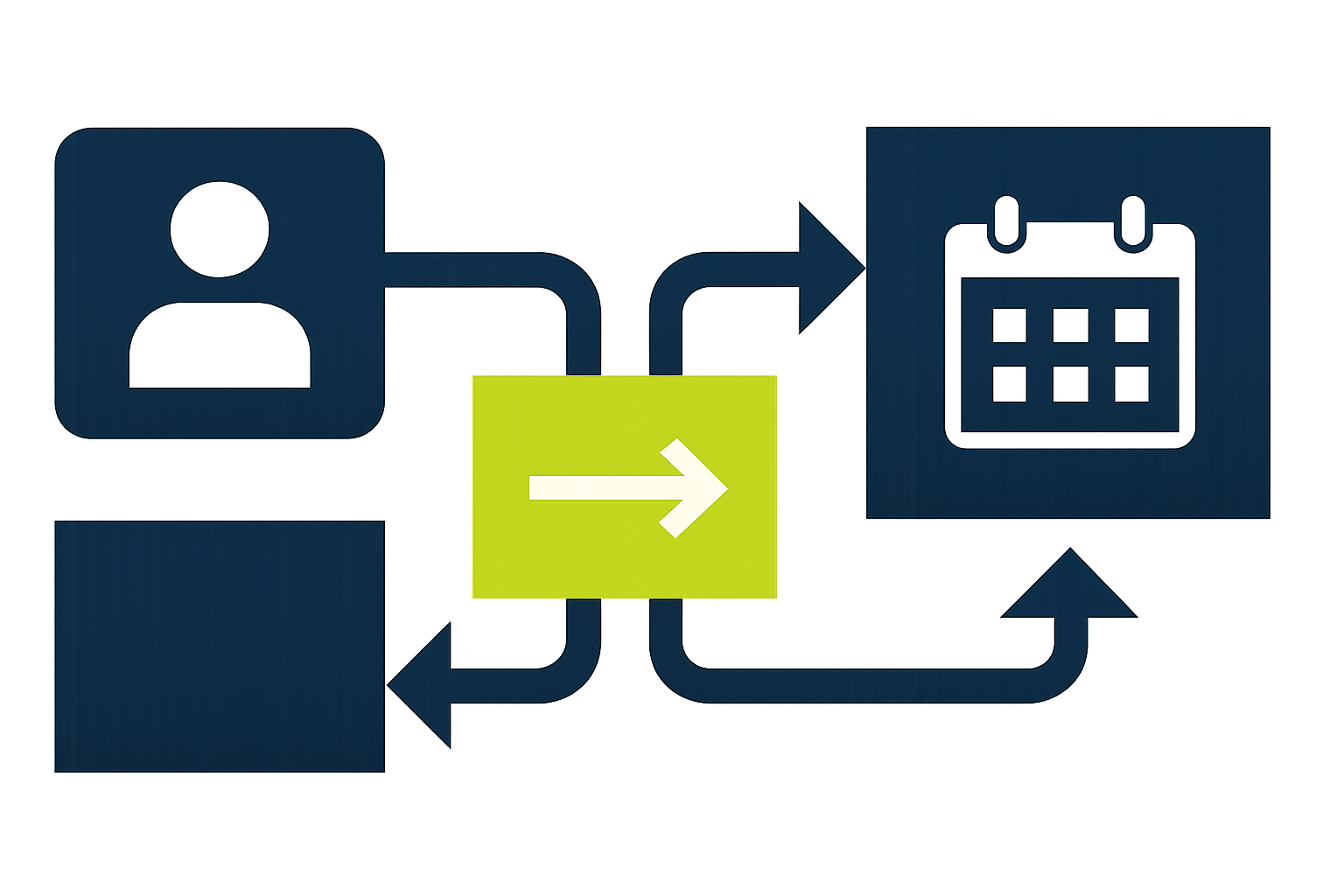
Patient scheduling looks simple until you try to automate it. The easy version is: ask for a reason, show open slots, book one. The real version is insurance compatibility, provider templates, visit types, location rules, age restrictions, referral requirements, and the very human reality that patients do not speak in clean data fields.
I have watched teams obsess over the language model and ignore the scheduling engine underneath. That is backwards. A conversational chatbot for scheduling succeeds when it can make the right next move after each answer, not when it sounds impressive for three turns and then drops the patient into a dead end. At AST, when we wire patient-facing workflows, we treat the chatbot as a guided intake layer on top of the system of record, not a sidecar app that improvises its own logic. That distinction matters more than any prompt trick.
The first mistake I see is trying to make the bot too conversational before it is operationally correct. Patients do not need a charming chatbot that can chat about weekend weather. They need one that can tell them whether a visit type is bookable, which locations support it, whether a telehealth slot is allowed, and what happens if they want the first available provider versus their own doctor.
That is why I start with the scheduling rules, not with the model. We map the decision tree first:
- What appointment types can be booked without staff review?
- Which providers have open self-scheduling slots?
- Do age, visit reason, location, or insurance alter the available options?
- What is the fallback when the bot cannot resolve a request safely?
- Which confirmations must be sent before the booking is final?
That list sounds basic. It is not. It is the difference between a bot that routes requests and a bot that creates callbacks for the front desk. I have seen teams launch a polished scheduling assistant only to discover that half their appointment types were technically unschedulable because the visit taxonomy had never been normalized. The bot was not wrong. The workflow was incomplete.
There is also a hard truth about patient engagement that teams do not like to hear: patients will forgive a strict workflow faster than they will forgive a confusing one. If the bot clearly says, “I can book follow-ups for established patients with Dr. Rao, and I’ll need your date of birth to confirm eligibility,” that is fine. If it pretends to understand everything and then asks for the same information twice, trust drops immediately.
That trust issue is where AI and engagement actually converge. The engagement layer is not just channel choice. It is how much effort the patient has to spend to complete the task. A good scheduling bot reduces friction by doing four things well:
- Recognize intent quickly Distinguish new patient, established patient, reschedule, cancel, location change, and referral-dependent requests before you ask unnecessary questions.
- Collect only needed constraints Ask for provider preference, visit reason, insurance, location, and timing only when that input changes the bookable options.
- Resolve or route Confirm the slot if the rules allow it; otherwise route cleanly to staff with the full context already captured.
- Close the loop Return a clear confirmation, reminders, and cancellation options so the patient does not need to call back for reassurance.
This is where a lot of teams overestimate the chatbot and underestimate the downstream systems. If your portal can schedule but your SMS reminder flow cannot update the appointment after a reschedule, the patient experience breaks even if the AI is perfect. I would rather ship a narrower bot that is reliable than a broad one that is brittle.
At AST, I have learned this the hard way in real implementations: the annoying edge cases are not edge cases. They are the daily workload. Same-day sick visits, provider-specific templates, location-specific booking windows, and appointment types that require additional triage all show up early and often. If the bot cannot handle them, front-desk staff become the human fallback for everything, and adoption dies.
That is why I prefer a layered design. The conversation layer handles natural language, the orchestration layer chooses the next question or action, and the scheduling service owns the source of truth. For practices that already have mature portals, we often integrate the bot into existing patient engagement surfaces rather than replacing them. That includes web chat, SMS, call deflection, and sometimes the patient portal itself. The channel changes. The control logic should not.
When this is done right, the chatbot becomes a practical extension of the scheduling desk, not a separate product the staff have to babysit. And if you want the engagement piece to hold, the bot needs to feel consistent across channels. A patient who starts on SMS and finishes on web chat should not have to repeat the entire request because the conversation state was lost.
Here is the practical way I would evaluate a conversational scheduling bot this week.
- Map the top booking flows Pick the five appointment types that create the most call volume and simplest routinized scheduling. Build from those first.
- Inventory the scheduling rules List every rule that changes availability: provider template, visit type, age, location, insurance, referral, telehealth, and lead time.
- Define the fail-safe routes Decide exactly when the bot must stop and transfer to staff, including incomplete answers, unsupported visit types, and conflicts in the patient record.
- Test channel continuity Start the conversation in one channel and finish it in another. If state breaks, fix that before launch.
- Measure task completion, not novelty Track whether the patient completed the scheduling task without staff intervention and without repeat contact.
That playbook is boring on purpose. Boring is what the front desk wants. The bot is not there to impress them with language generation. It is there to get patients scheduled correctly, quickly, and with less back-and-forth.
| Option | What it does well | Where it breaks | Best use |
|---|---|---|---|
| Scripted chatbot | Predictable, easy to constrain | Fails on variation and multi-intent requests | Very narrow booking flows |
| LLM-only assistant | Natural conversation | Hallucinates availability, weak on policy | Prototype demos, not live scheduling |
| Rules-first conversational AI | Safe handoffs, reliable booking logic | Requires upfront workflow design | Production patient scheduling |
If you are weighing those choices, I am blunt about it: the rules-first approach wins in healthcare because scheduling is a controlled operational process, not a free-form chat experience. The model helps the patient speak naturally. The rules keep the practice sane.
For teams already thinking about broader AI + engagement convergence, scheduling is usually the best first use case because it has a clear task boundary and obvious patient value. That is also why it is one of the easiest places to prove that AI can reduce friction without creating clinical risk. If you want to see how we design that kind of patient-facing workflow at AST, start with our patient engagement systems and build from the workflow, not the chatbot character.
One thing I disagree with strongly: teams often treat scheduling as a low-stakes automation project. It is not. Scheduling is the first operational promise a patient experiences. If you botch it, you have already made the rest of the care journey harder.
That is why the best scheduling chatbot is not the one with the fanciest dialogue. It is the one that respects patient intent, understands the practice rules, and finishes the job without inventing anything. I have seen enough overbuilt assistants to know the pattern: the more they try to sound human, the more they expose the seams between AI and operations. The better path is to make those seams deliberate.
If you want to add AI to patient engagement, start where the patient feels the pain and where the workflow is stable enough to automate responsibly. Scheduling is that place. Build the logic first, the conversation second, and the fallback every single time.
Build scheduling AI that staff can trust
If you want conversational AI to reduce call volume without creating booking errors, the workflow has to lead and the model has to stay in its lane. We build patient engagement systems that hold up in live clinic operations, not just in demos.


Comments
Comments are warming up. Live, no-sign-in discussion will appear here shortly.
Have a question now? Email info@allstartech.net.