
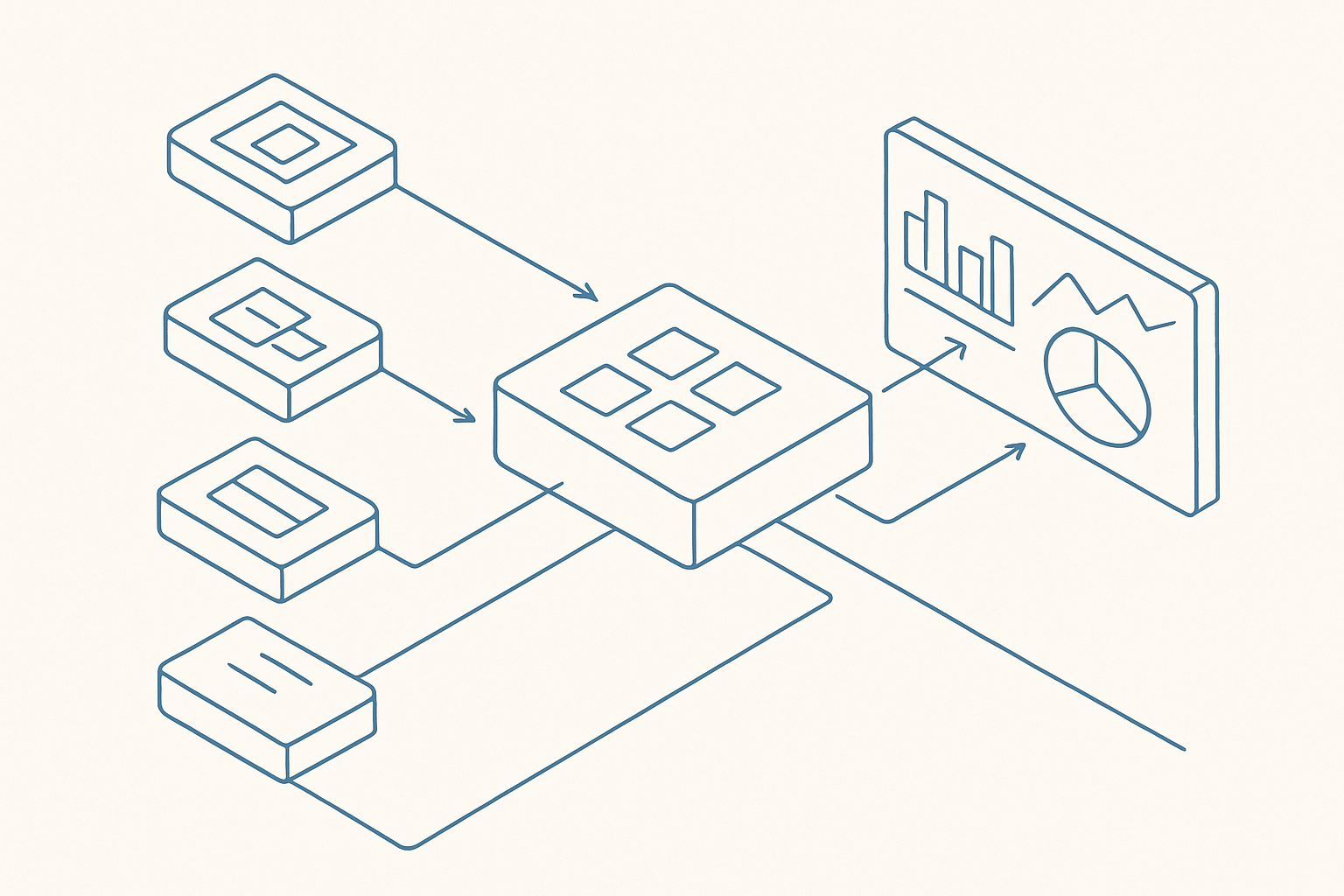
SDOH data looks simple until you try to use it in a clinical analytics platform. Then you find the real problem is not collection. It is shape. One system stores food insecurity as a checkbox, another buries it in free text, a third captures a screening score that only makes sense inside that vendor’s workflow, and a fourth never collected it at all but still needs to explain care utilization under value-based contracts.
I build these pipelines for a living, and I have learned this the hard way: the moment you let social determinants sit outside the analytics model, they become decorative. They show up in slide decks and vanish when someone actually needs a cohort definition, a care gap list, or a stratification rule that can be audited.
For value-based care analytics, SDOH matters because it changes interpretation. A missed colorectal screening, a readmission, or a no-show rate does not mean the same thing across populations if transportation insecurity, housing instability, or food access barriers are present. That does not mean every model should swallow every screening response blindly. It means the platform has to know what was asked, when it was asked, by whom, and how confidently the result maps to a reusable concept.
This is where most teams make their first mistake. They design for reporting first and integration second. That usually means one source system wins, every other source gets flattened, and the downstream analytics team inherits a pile of ambiguous fields with no provenance. You can get a dashboard out of that. You cannot get a dependable value-based care engine.
What SDOH integration actually has to do
A real SDOH integration layer has four jobs, and all four matter:
- Capture source context so you know whether the data came from intake, bedside screening, community referral, claims-adjacent enrichment, or a patient portal workflow.
- Normalize concepts so housing instability, food insecurity, transportation barriers, utility stress, and caregiver strain resolve to consistent internal values even when the source phrasing varies.
- Preserve provenance so analysts can trace a number back to the exact question, encounter, form version, and timestamp.
- Expose uncertainty so missing, stale, inferred, and self-reported data do not get treated like equally strong facts.
That last one is the part teams usually skip, and it is the one that hurts you in production. A patient who never answered an SDOH screen is not the same as a patient who answered no needs. If your platform collapses those states, your care management logic starts chasing the wrong people or ignoring the right ones. We have seen this in AST delivery work: the fix was never a prettier dashboard. It was a stricter data contract.
In practice, I want SDOH integration to sit between the source workflows and the analytics warehouse as a governed translation layer. It receives raw events, maps them to a canonical structure, stamps the source system and form version, and keeps the original payload around for traceability. If your platform is built on FHIR R4, that usually means taking Observation, QuestionnaireResponse, Condition, and sometimes ServiceRequest or CarePlan fragments and turning them into internal analytic facts without pretending every source expresses them the same way. If you are still passing only CSV extracts into the warehouse, you are building a fragile batch report engine, not an analytics platform.
At AST, we have seen the same pattern in different environments: the organizations that win with social data are the ones that respect workflow reality. They do not ask clinicians to re-enter data for analytics. They do not make care managers guess which screenshot field maps to the warehouse column. They wire the data model to the way the work actually happens.
Build the integration around use cases, not categories
That sounds obvious until you watch a team design a giant SDOH taxonomy before deciding what the platform is supposed to answer. Do not start with every possible social determinant. Start with the decisions the analytics platform must support.
For value-based care, the common ones are:
- Risk stratification Use SDOH to improve prioritization, but only when the screening is recent enough and the concept is mapped consistently.
- Care management outreach Join social needs to utilization and appointment behavior so teams can target the right patients without overcalling low-risk populations.
- Quality measure interpretation Separate access barriers from non-adherence when reviewing gaps in care or repeat acute utilization.
- Population segmentation Group patients by social complexity so intervention programs are aligned to real need, not just diagnosis burden.
- Referral closure tracking Connect a documented need to a community resource referral and confirm whether the loop actually closed.
Each use case changes the data requirements. For outreach, freshness matters. For referral closure, you need status transitions. For stratification, you need a stable denominator and a reproducible scoring rule. If you do not define that up front, the analytics team will build one interpretation and the care operations team will build another. Then everyone spends a quarter arguing about whose list is correct.
One thing people get backwards: they think more fields mean better analytics. They do not. More fields with inconsistent semantics just produce more disagreement. I would rather have six SDOH concepts mapped cleanly across the enterprise than thirty half-mapped categories nobody trusts.
How AST structures the data flow
When we build this into clinical analytics platforms, we do not treat SDOH as a single table. We split it into layers so each layer can do one job well.
| Layer | What it stores | Why it matters |
|---|---|---|
| Raw ingestion | Original payloads from EHR, portal, referral, or claims-adjacent sources | Preserves source truth and supports replay |
| Normalization | Canonical SDOH concepts and value sets | Makes cross-source analytics possible |
| Governance | Source system, form version, timestamps, consent or collection context | Supports auditability and freshness checks |
| Analytic facts | Reusable measures such as needs present, need absent, need stale, referral open, referral closed | Feeds cohorting, alerts, and reporting |
| Presentation | Dashboards, worklists, and measure outputs | Keeps user-facing views separate from source complexity |
This separation matters because SDOH data changes over time. A patient can screen positive, receive a resource, and later screen differently. If your platform only stores the latest value, you lose history. If it stores every raw entry with no abstraction, your analytics logic becomes unreadable. You need both: immutable raw capture and clean analytic facts.
That is also how we handle integration when working with Epic, Oracle Health, athenahealth, or PointClickCare-connected environments. The source systems are different. The operational rhythm is different. The edge cases are different. But the analytics layer still has to ask the same questions: what was collected, under what workflow, and can I trust this value enough to use it in an operational decision?
Where the integration usually breaks
The weakest link is rarely the ETL job. It is the semantic mismatch. Here are the failures I see most often:
- Screening tools change without notice and the mapping layer keeps assuming the old question text still exists.
- One site uses structured responses and another uses scanned forms, so the warehouse thinks it has coverage when it really has artifacts.
- Patients are screened in multiple settings, but nobody decides which source wins when values conflict.
- Referral systems do not close the loop, so the platform can say a need was identified but not whether it was addressed.
- Analytics teams reuse clinical flags as proxies and incorrectly equate diagnosis burden with social risk.
I made one of those mistakes myself on an early rollout. We trusted a clean-looking field feed from a source system and assumed the data quality was stable. It was not. The field was populated, but the underlying form logic changed, which meant our concept mapping silently drifted. Nothing crashed. That is the dangerous part. The dashboard looked healthy while the meaning was already wrong.
That is why I am so aggressive about versioning. We version the source form, the concept map, and the analytic rule. If one of those shifts, the platform should know it immediately. Silent semantic drift is worse than a broken pipeline because it looks like success.
A practical playbook for this week
If you are trying to stand up SDOH integration in a clinical analytics platform, start here:
- Pick three decisions Choose three analytics decisions the platform must support right now, such as outreach prioritization, referral follow-up, and measure stratification.
- Inventory sources by workflow List every place SDOH can enter the system, including portal forms, intake, care management, community referrals, and scanned documents.
- Define canonical concepts Create one internal vocabulary for the SDOH domains you actually use. Do not copy every vendor field into your model.
- Add provenance fields Store source system, encounter context, form version, collection date, and whether the value was patient-reported, staff-entered, or inferred.
- Separate raw from analytic Keep raw payloads for replay and debugging, then generate stable facts for dashboards and cohorting.
- Write conflict rules Decide what happens when two sources disagree, when data is stale, or when the response is missing.
- Test with ugly records Use incomplete screens, duplicate patients, conflicting values, and stale referrals before you go live.
If you do those seven things, you will be ahead of most teams. Not because the architecture is fancy, but because it is honest about how clinical social data behaves in real operations.
For teams building broader clinical data platforms, I also recommend keeping your integration pattern aligned with the rest of the stack. If FHIR R4 is your canonical exchange layer, let it do exchange. Let the warehouse do analytics. Let the governance layer own provenance and trust. And if you are connecting SDOH workflows to patient-facing refresh or outreach, make sure the data model can feed those experiences without inventing a second source of truth. That is the same discipline we use across AST’s clinical data and analytics work and it is why the platform stays usable after go-live, not just during the demo.
It is also where our approach to healthcare integration pays off. You do not need a brittle all-or-nothing warehouse ingest. You need a system that can translate messy clinical reality into governed analytics without lying about what it knows.
FAQ: SDOH integration for analytics teams
SDOH integration is one of those jobs that looks easy until someone tries to use the data in a real operational decision. Then the gaps show up fast. If your platform can preserve source truth, normalize semantics, and expose uncertainty, the analytics stop fighting the workflow and start helping it.
The goal is not to make social data pretty. The goal is to make it dependable enough that care teams, analysts, and value-based programs can use it without second-guessing every number on the screen.
Build SDOH analytics that survive real workflow
If you are wiring social risk into a clinical analytics platform, I can help you design the source model, governance rules, and normalization layer so the data stays useful after go-live. We build these pipelines to support value-based care, not just clean charts.



Comments
Comments are warming up. Live, no-sign-in discussion will appear here shortly.
Have a question now? Email info@allstartech.net.