
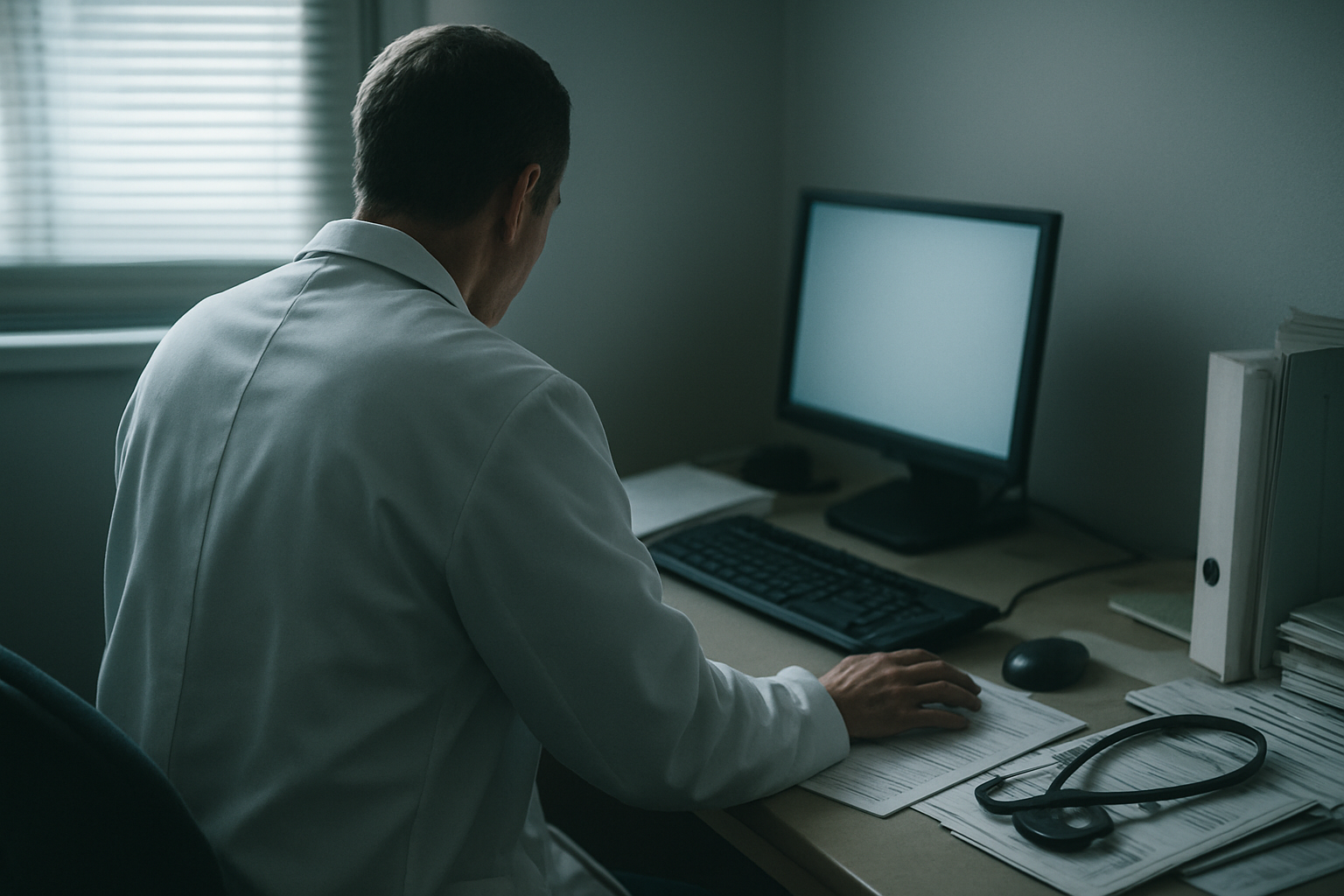
Physician documentation burden is not a vague feeling. It shows up in the late-night chart closure, in the note that gets pasted into the wrong section and then fixed twice, in the visit where the physician is clearly trying to listen while also thinking about the assessment, the plan, and the billing trail. I have watched teams chase that problem with faster templates, smart phrases, copy-forward guards, and better training. Those help a little. They do not change the basic fact that a clinician is still forced to act like a scribe, editor, and coder at the same time.
Ambient listening changes the job definition. Instead of making the physician narrate the chart after the visit, the system listens during the visit and assembles a draft from the actual encounter. That sounds simple until you put it in a live clinic. Then you learn the hard part: the note is not the product. The product is the handoff from conversation to usable documentation without making the physician babysit the system the whole time.
At AST, I have seen the same pattern in real delivery: the teams that succeed treat ambient documentation as workflow infrastructure, not as a dictation add-on. That means the note has to land inside the existing EMR in a form the physician recognizes, the codes need to be traceable to the spoken encounter, and the clinician needs to edit less, not more. We built around that principle in Medexa, where the ambient capture is tied to live coding support instead of leaving the note and the claim as two separate chores.
Here is what most people get wrong. They think the main problem is speed. It is not. If speed were enough, a fast typist with a template would solve burnout. The real problem is interruption density. Every time a physician pauses to type a diagnosis, search for a medication, remember what was said three minutes ago, or clean up a note after the encounter, cognitive load spikes. That is why a system can feel “helpful” in a demo and still be exhausting in production.
The mechanism that actually helps is boring, and that is a compliment. Ambient listening captures the conversation in context, identifies who said what, and organizes clinical facts into sections the doctor already expects: HPI, exam, assessment, plan, orders, and code candidates. Then the system should do the low-value glue work that usually gets in the way: infer timestamps, retain speaker attribution, preserve medication mentions, and keep the draft attached to the right patient encounter. If the clinician has to repeat or restate the same facts in the interface, the tool fails the burden test.
We learned one useful friction point the hard way: our first instinct was to make the draft more polished. That was the wrong move. Polished drafts can actually increase review time because clinicians start auditing phrasing instead of fact pattern. The better experience is a rough draft that is faithful, easy to skim, and obviously grounded in the encounter. Clinicians do not need prose. They need a reliable clinical scaffold they can approve quickly.
That is especially true in specialties with fast problem switching. A visit can move from one symptom to another, then to medication adherence, then to a procedure discussion, then to follow-up instructions. A well-built ambient system tracks those transitions without forcing the physician to micromanage the note structure in real time. The system should absorb the mess of conversation and preserve enough structure that the EHR note can still be trusted later.
So what does a good implementation look like? I break it into a few practical requirements.
- Capture the encounter without changing the visit The physician should be able to start the session and keep eye contact with the patient. If the workflow demands too many taps, the burden comes right back.
- Separate listening from approval The note draft should build in the background, then present a concise review moment at the end. Physicians should approve, edit, or reject sections quickly, not line-by-line in the middle of the conversation.
- Keep the output tied to the source encounter Every note segment should remain traceable to the visit itself. That keeps review grounded and makes it easier to trust the draft.
- Anchor codes to clinical evidence If ICD-10 or CPT suggestions cannot be traced back to what was actually said or observed, they belong in review, not in production.
- Write back cleanly to the EHR Weak write-back is where good pilots die. If the physician has to copy the content into Epic, Oracle Health, athenahealth, or another system by hand, the burden just moves downstream.
The EHR integration point matters more than most buyers admit. I have seen ambient tools get praised in testing and then crash into reality because the output did not fit the target charting workflow. Notes lived in one place, tasks in another, codes in a third, and the physician had to stitch them together. That is not automation. That is an extra coordination layer. In AST delivery, we design for the actual clinical record system the team uses, because the burden does not disappear until the note, the order trail, and the billing support all live in the same operational flow.
There is also a trust problem that affects burden more than features do. If physicians do not trust the output, they slow down to verify everything. That is the opposite of relief. Trust comes from consistency, not from a flashy demo. The draft has to repeat the same kind of mistake pattern every time, because predictable mistakes are easier to scan than random ones. That is why review behavior matters. Clinicians build a mental shortcut when the output is stable enough to skim.
Ambient listening also works differently depending on specialty and visit length. In a short, high-volume setting, the benefit is often reducing the aftermath of documentation: the ending of the visit becomes the slowest part of the day, and ambient capture compresses that tail. In a longer visit, the bigger gain is keeping the physician present. The doctor is not thinking about how to remember the note later, because the note is already being assembled. That changes the tone of the encounter itself.
And no, this is not about replacing the physician’s clinical judgment with a model. The best systems do not decide the encounter for the doctor. They preserve the encounter so the doctor can decide faster and with less friction. That distinction matters. Burnout is not only about hours worked. It is about the number of times a physician is forced to second-guess a tool that was supposed to help.
At AST, we have seen good pilots stall when teams ignore the boring operational details: microphone quality, room acoustics, specialty vocabulary, clinician preference for note style, and how the output lands inside the EMR. Those details are the product. The model is only one part. Delivery is the rest.
If you are buying or deploying ambient documentation this week, use this checklist before you call it a burden-reduction program:
- Does the physician spend less time after the visit retyping the same facts?
- Does the output reduce interruptions during the encounter, or create new ones?
- Can the draft be reviewed quickly without a full rewrite?
- Are codes, diagnoses, and plan elements linked to the visit context?
- Does the write-back match the way the clinic already documents?
- Can the system handle specialty phrases, interruptions, and correction language without losing the thread?
That is the bar. Not “does it sound impressive in the pitch.” Not “does it produce a long note.” Not “does it have AI in the name.” The bar is whether physicians leave clinic with less unfinished work in their heads. That is the real burden. That is what ambient listening should remove.
What I want buyers to understand is simple: ambient documentation is not valuable because it is futuristic. It is valuable because it gives physicians part of their life back in the hour after the visit, when charting usually piles up. That is where burnout lives. Not in the brochure. In the unfinished note queue.
The teams that get this right stop asking whether the model sounds smart and start asking whether the clinician feels less interrupted, less delayed, and less drained. That is the only metric that matters when the goal is to reduce physician documentation burden.
Reduce charting burden without breaking the workflow
If you want ambient documentation that actually lowers physician fatigue, we should talk about the workflow, the write-back, and the review path together. That is how we build assistive systems that fit real clinics instead of adding another place for notes to get stuck.
Comments
Comments are warming up. Live, no-sign-in discussion will appear here shortly.
Have a question now? Email info@allstartech.net.