
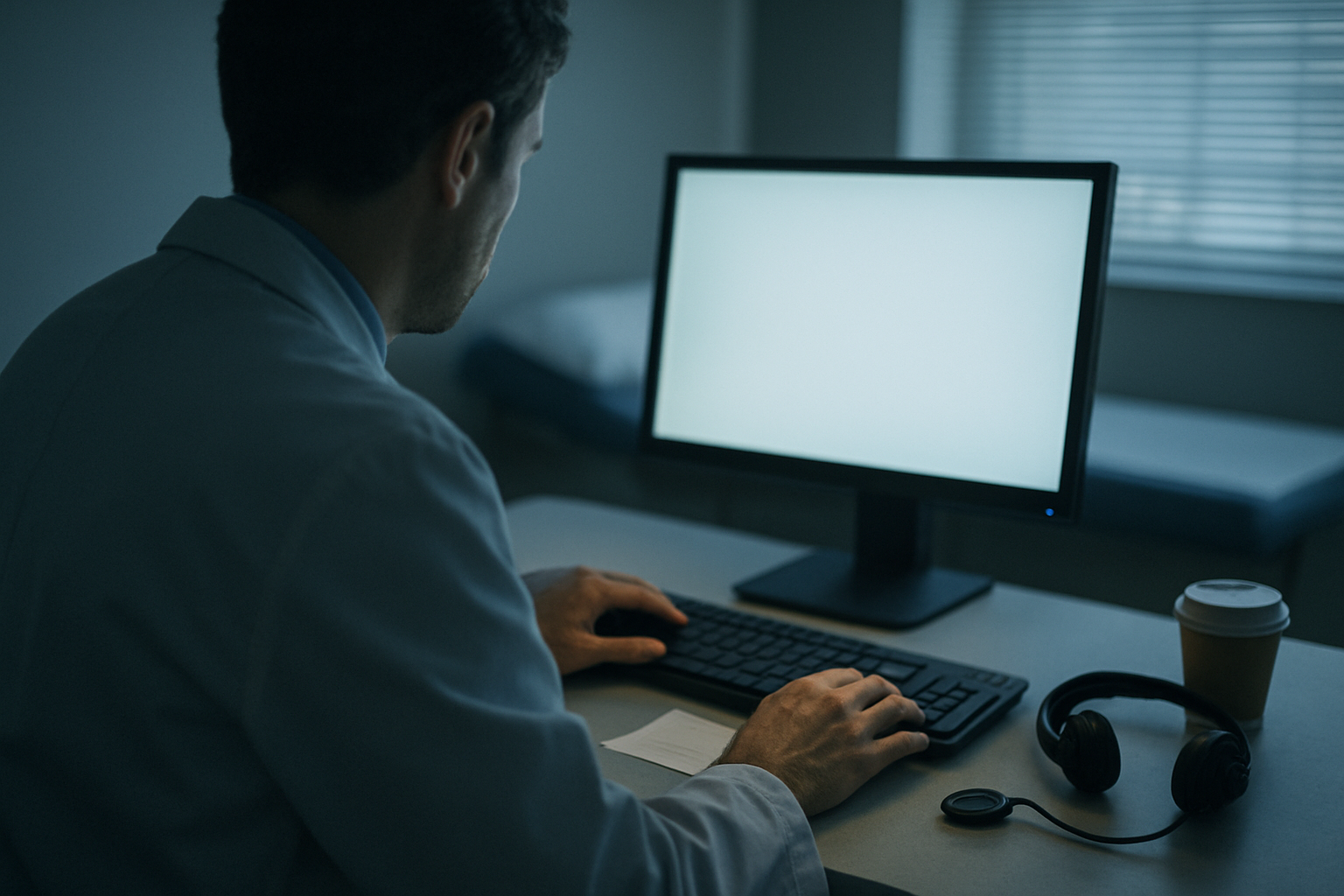
The first mistake I see is the one everyone makes before go-live: they ask whether ambient documentation is accurate enough, as if accuracy alone buys ROI. It does not. I have watched teams get seduced by a clean demo, then spend weeks discovering that the real cost sits in the gaps between the transcript, the assessment, and the final note. The clinician is not paying for words. They are paying for a chart that closes without stealing their evening.
That is why I frame ambient ROI around after-hours charting first. If your note is still open at 8:30 p.m., the system has failed in the place that matters most to the user. The point is not to eliminate every post-visit edit. The point is to remove the heavy lift: summarizing the encounter, finding the right problem framing, and rebuilding the note from memory after the last patient has left. That is where Medexa fits when documentation and coding need to travel together instead of drifting apart.
We have seen this pattern in live delivery: the biggest gains do not come from the fanciest model behavior. They come from disciplined scope. The ambient system has to know what kind of note it is building, what specialty language matters, and what should never be inferred. When that boundary is loose, clinicians spend time cleaning up hallucinated structure, which is the fastest way to erase ROI. When the boundary is tight, the generated note becomes a draft they can trust enough to finish in minutes instead of rebuilding from scratch.
Here is the practical math I use with teams, and it is intentionally unglamorous:
- If a clinician saves even a short block of end-of-day charting on most clinic days, that time compounds across a schedule faster than people expect.
- If the ambient note reduces addenda and backtracking, it cuts interruptions the next morning, which matters as much as the evening win.
- If coding-ready language is captured in the moment, billing and documentation stop competing for the same after-hours attention.
- If the workflow still requires a second note tool, a copy-paste step, or a separate coding pass, ROI will leak out through every extra click.
At AST, we have built enough clinical software to know where these programs break. One of the most common surprises is that physicians do not always want the longest possible transcript or the most verbose summary. They want the least annoying path to a final note that feels like theirs. That means the review screen has to be ruthless about what matters. If the ambient draft buries the assessment inside a wall of text, the user loses time scrolling. If it surfaces the structure cleanly, the note gets signed and the inbox stays lighter.
The other surprise is that the operational win often shows up before the financial one. Teams notice fewer late-night charts, but they also notice fewer small signs of burnout: less rework after clinic, less toggling between windows, fewer phone calls to reconstruct what was said. That matters because after-hours charting is not just an efficiency problem. It is the visible symptom of a workflow that is asking clinicians to do second-shift administrative labor after they have already finished their patient load.
What actually drives ROI
I do not believe in loose ROI narratives for ambient documentation. I believe in mechanisms. The return comes from four places, and if one is missing, the whole model gets weaker:
- Less reconstruction The note already contains enough of the encounter that the clinician is not rebuilding the story from memory after clinic.
- Fewer edits The draft is structurally right for the specialty, so review becomes correction, not rewriting.
- Faster closure The note can be signed while the case is still warm, before the day’s details evaporate.
- Cleaner downstream work Documentation that is tightly linked to coding and orders reduces the hidden after-hours tasks that live outside the note itself.
The common assumption I disagree with is that ambient wins are all about speed. Speed is obvious. The deeper ROI is emotional friction reduction. A clinician who ends the day with a mostly complete chart does not need to restart the visit in their head later that night. That is a quieter benefit, but it is the one people remember when they decide whether the tool is worth sticking with.
| Workflow choice | What it looks like | Where after-hours charting survives |
|---|---|---|
| Dictation only | Clinician speaks, then edits a full note | Structure still has to be rebuilt manually |
| Template-based scribing | Good fields, but lots of cleanup | Assessment and plan often need rework |
| Ambient documentation | Encounter captured in context, reviewed in draft form | Residual edits remain, but the heavy lift disappears |
That table is why I push teams to separate feature appeal from workflow reality. A great-sounding tool can still leave clinicians with a pile of cleanup work at 7 p.m. If the ambient system does not make the final note feel smaller, it has not really solved the problem.
How AST evaluates ambient ROI in the real world
When AST works on ambient documentation programs, we do not start with a promise. We start with the actual closeout path. That includes the draft note, the physician review step, the signature step, and whatever side channel exists for coding or task capture. The point is to see where time accumulates after the visit is over. In our work, the teams that get traction are the ones willing to redesign that end-of-day flow instead of just bolting a new capture tool onto the old process.
- Map the after-hours loop Identify exactly where charting spills past clinic: unfinished notes, delayed coding review, addenda, or inbox cleanup. Do not estimate. Watch the workflow.
- Define the minimum acceptable draft Decide what the ambient note must reliably produce for your specialty: HPI summary, exam elements, assessment framing, plan, or code-linked evidence.
- Test with real clinic noise Run the system in the rooms, with interruptions, bad accents, competing conversations, and the actual pace of care. That is where polished demos collapse.
- Measure signed-note time, not just draft time A fast draft that still waits in the chart queue is not ROI. Signed note time is the metric that matters.
- Review the cleanup categories Track what clinicians edit repeatedly. Those patterns tell you whether the system has a language problem, a specialty model problem, or a workflow problem.
- Lock the improvement loop Feed the repeated edits back into configuration, templates, and review rules so the ambient draft gets closer to the way your clinicians actually practice.
That last step is where many teams get lazy. They think implementation ends when the pilot looks promising. It does not. The clinical note is a living artifact. If you do not refine it with real user behavior, the ambient system will settle into a mediocre middle state: good enough to keep, not good enough to love.
There is also a reimbursement angle, but I never lead with it unless the documentation is already behaving. If the ambient note captures the precise spoken grounds for a code, then coder review gets easier, denials get less arbitrary, and the team spends less evening time discovering missing specificity. That is one reason Medexa matters when the conversation is not just documentation but documentation plus claim readiness. The value is not in pretending the AI replaces judgment. The value is in making the human review step shorter and better informed.
And yes, we have made the mistake of overfitting to the team that loves new tools. That group will tolerate more friction than the average clinic. The broader clinician population will not. They will give you one or two bad nights of charting, then mentally assign the system to the trash can. Ambient documentation has to earn trust fast, and the fastest path is boring: fewer late notes, fewer open charts, fewer moments where the clinician mutters, “I still have to fix all of this later.”
The ROI case is strongest when ambient documentation is treated as a clinical operations tool, not a novelty. It should shrink the evening work that nurses, physicians, and specialists have been carrying for years. If it does not do that, the rest is noise.
Cut after-hours charting without adding cleanup work
If your clinicians are still finishing notes at night, the answer is not a louder demo. It is a workflow that produces a closer draft, faster review, and fewer rewrites after clinic. That is the standard we build toward in ambient documentation programs at AST.
Comments
Comments are warming up. Live, no-sign-in discussion will appear here shortly.
Have a question now? Email info@allstartech.net.