
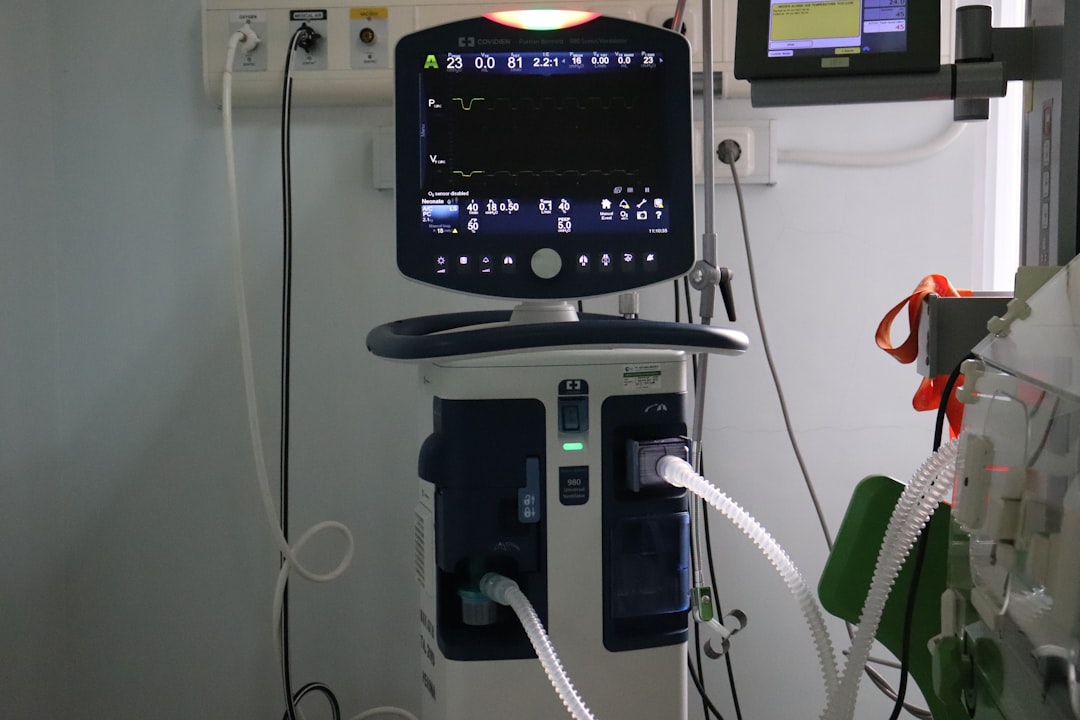
Shadow deployment is the line I draw between “we tested it” and “we know what it does in real life.” I’ve shipped clinical software long enough to stop trusting demo accuracy. In one build, the model looked excellent in validation and quietly drifted once it met messy charting, partial notes, and the weird timing patterns that only show up on a busy unit. Shadow deployment caught it before a single patient-facing workflow changed.
That is the whole point. You run the AI in parallel. It sees the same inputs it would see in production, produces outputs, gets instrumented, gets audited, and has zero influence on care. No orders, no nudges, no auto-routing, no silent “assist.” It watches. You watch it.
Why major health systems now require it
I’ve seen governance teams take the same hard line across very different use cases: documentation assistance, risk prediction, triage support, coding suggestions. The common thread is not the model type. It is trust. Clinical AI can look statistically impressive and still fail in ways that matter operationally: wrong thresholds, unstable outputs, inequitable behavior across patient groups, or brittle performance when the upstream data gets ugly.
Health systems require shadow deployment because they do not want surprises in the live stack. They want evidence on real data, in real time, under real load. They want to know whether the model can handle missing fields, late charting, duplicate encounters, and all the little disasters that never show up in a clean retrospective dataset.
That gap is where shadow deployment earns its keep.
What shadow deployment actually looks like in the architecture
The architecture is simple on paper and unforgiving in practice. The production workflow continues exactly as it is today. A parallel inference path taps the same approved data feeds, generates outputs, and writes those outputs to a separate store for review. The model never calls back into the clinical path.
At AST, when we’ve built this kind of instrumentation into clinical AI and automation programs, the hard part has never been “can we run the model?” The hard part has been “can we observe it cleanly?” You need to capture:
- input versioning, so you know exactly what the model saw
- output timestamps, so you can compare latency against operational expectations
- confidence or score distribution, so you can spot instability
- drift metrics, so you can see when the data environment changes
- exception logs, so you can trace failed inferences back to source systems
- human review outcomes, so you can compare model behavior against clinical judgment
We learned that if instrumentation comes second, you end up with a blurry science project. If it comes first, you get a governance asset.
shadow deployment is a control system, not a checkbox
The strongest argument I make to clinical leaders is blunt: if you cannot measure the model in parallel, you are not ready to let it touch care. Shadow deployment gives you a controlled way to test the claims that actually matter in production:
- Does the model behave consistently shift to shift?
- Does it degrade when data arrives late or incomplete?
- Does it produce different outputs for similar patients in a way the clinical team cannot explain?
- Does it create alert volume that would drown the workflow?
- Does it fail silently when upstream interfaces hiccup?
That last one matters more than people think. I’ve seen clinicians trust a tool that was actually running on stale or partial data because nobody instrumented freshness and lineage well enough to prove otherwise.
What healthy governance teams ask for before live rollout
The best health systems do not ask, “Is the model accurate?” They ask, “What would have to be true for us to trust it?” That changes the conversation completely.
In practice, the gating checklist usually includes acceptable performance thresholds, equity checks across relevant cohorts, operational latency, error handling, rollback conditions, audit trail completeness, and a human review process for discrepancies. They also want a clear answer to the most uncomfortable question: what does the model do when it is wrong?
My answer is always the same: if the only plan is to notice later, it is not ready.
Why this matters for clinical AI and automation specifically
Clinical automation amplifies both good and bad decisions. If a model suggests the right next action, you save time. If it suggests the wrong path, you can scale the mistake across the enterprise faster than any manual process ever could. That is why shadow deployment is now standard governance for serious clinical AI programs. It is the proof layer between development and deployment.
At AST, we’ve spent years building healthcare systems where integration, compliance, and observability are not afterthoughts. That matters here. You cannot bolt on shadow deployment later and pretend it will protect you. You need the data contracts, the logging, the access controls, and the review workflow designed up front. We’ve seen this across large respiratory care environments and broader clinical build programs: once the production path is clean, shadow evaluation becomes fast and credible. Without that foundation, it becomes noisy and political.
That is the real reason health systems require it. Not because they distrust innovation, but because they understand consequence.
Shadow deployment lets you earn the right to go live.
We build the architecture, instrumentation, and review workflow so you can prove safety before rollout. Book a discovery call.



Comments
Comments are warming up. Live, no-sign-in discussion will appear here shortly.
Have a question now? Email info@allstartech.net.