

EMR platform, built ground-up
Clinical documentation, AI-assisted workflows and full EHR integration, built from scratch for the network's therapy operations.
For 17 years we've built the EMR/EHR systems, clinical integrations and HIPAA-compliant platforms that run inside real care networks.



Ambient documentation, regulatory intelligence, and FHIR-ready architecture — built for therapy networks that can't afford a failed rollout.
HIPAA, HITRUST, SOC 2, and DHA compliance built into the system from day one — not bolted on before an audit.

Clinical documentation, AI-assisted workflows and full EHR integration, built from scratch for the network's therapy operations.
Claims processing and payer connectivity, built into a live clinical platform.
Running across production deployments. In the field, not on the roadmap.
Tracks and surfaces regulatory changes for a national therapy network in real time.
Captures and structures therapy encounters without manual input.
From EMR platforms to ambient clinical AI — built, shipped, and running inside real care networks across four regions.

Listed under the Dubai Health Authority framework for digital health platforms operating across the UAE and the wider MENA market.

Our healthcare engineering work, presented at the field's defining conference for health information and technology.
From health systems and global brands to elite sport, leading organizations rely on AST to build and run the software they can't afford to have go down.













Enterprise-grade EMR, integration and clinical AI for the systems that run acute care at scale.
Learn morePurpose-built EHR and workflow software shaped around the way each specialty practice actually delivers care.
Learn moreDocumentation, scheduling and compliance tooling tailored to behavioral and mental-health programs.
Learn moreHIPAA-compliant virtual care and remote patient monitoring that plug straight into the clinical record.
Learn moreHIPAA, SOC 2 and audit scaffolding engineered in from day one — so your platform passes review the first time.
Learn moreThreat modeling, secure architecture and continuous monitoring that keep protected health data safe end to end.
Learn moreFor 17 years AST has delivered clinical software that runs in production — helping healthcare organizations ship faster, stay compliant, and elevate care delivery.

1,000+ therapy orders created monthly
Post-Acute CareAST built clinical documentation, AI-assisted workflows and full EHR integration from scratch for the network's therapy operations — replacing fragmented tooling with one platform.

30% fewer claim denials across payers
Revenue CycleClaims processing and payer connectivity built directly into the platform, handling real reimbursement workflows end to end and cutting manual rework.
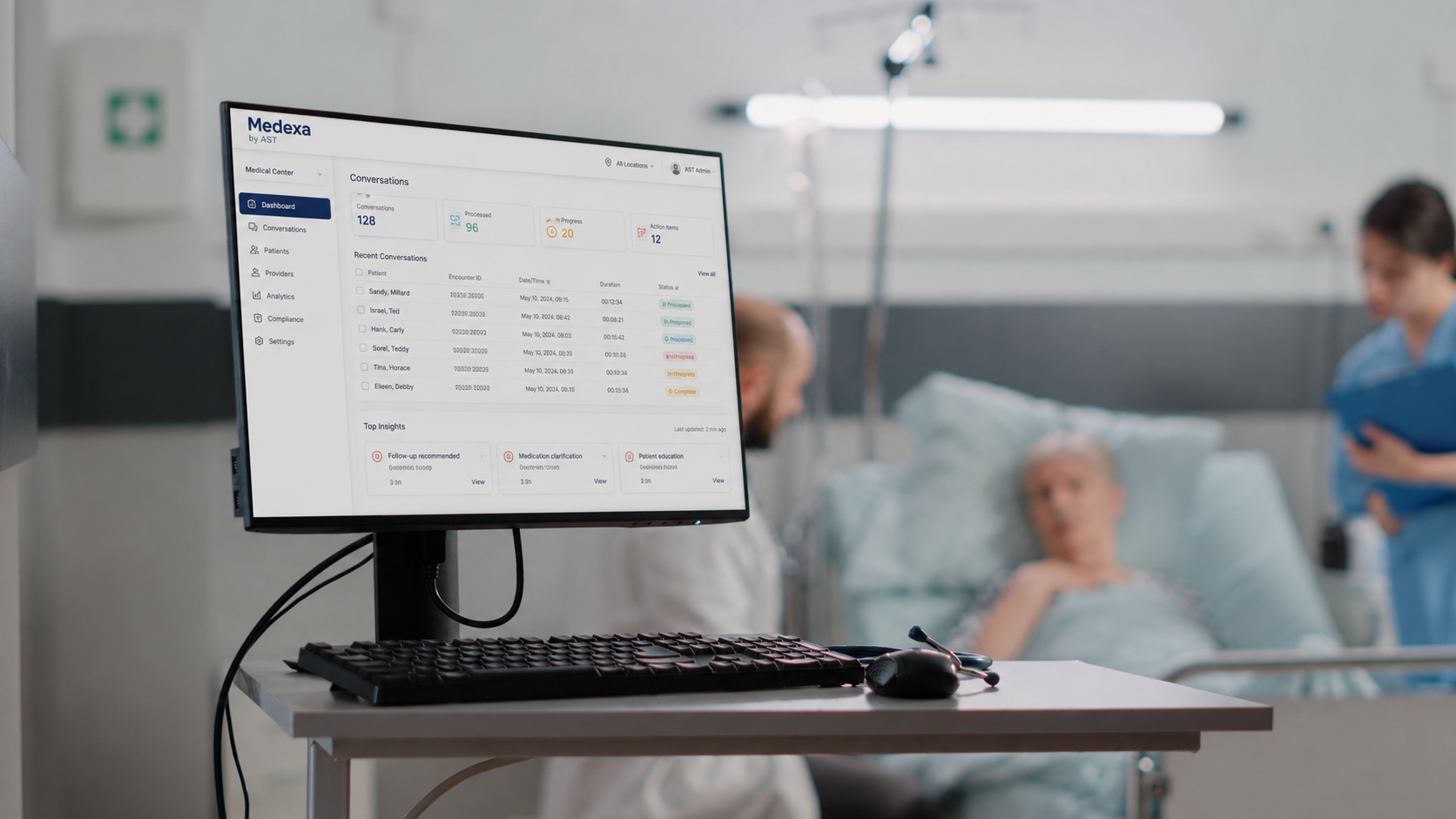
0 manual notes for captured encounters
Clinical AIA clinical documentation pipeline that captures and structures therapy encounters automatically — no manual input, freeing clinicians to focus on care.

Real-time regulatory change tracking
ComplianceA purpose-built compliance engine that tracks and surfaces regulatory changes as they happen, keeping clinical and compliance teams ahead of the curve.

5 live EHR integrations in production
EHR IntegrationLive HL7 and FHIR connections to the platforms care teams already run — owned end to end, in the field rather than on a roadmap.
Our 2026 briefing on where clinical AI is actually moving the needle — and what separates the systems pulling ahead from the ones still piloting.
of health systems have an active generative-AI initiative in production or pilot.
faster clinical documentation reported where ambient AI is deployed at scale.
projected annual healthcare savings unlocked by AI by the end of the decade.
median time-to-value teams report when AI is engineered into the workflow.
AST embedded with our team and shipped EMR features at a pace our internal roadmap couldn’t touch — without ever cutting a compliance corner.





What enterprise buyers expect from AI-powered SaaS products—from architecture and governance to security, ROI, and production reliability.

Compare MatrixCare and PointClickCare for SNF migrations in 2026: API depth, AI roadmap, billing integration, and PDPM documentation realities.

Practical Kubernetes cost optimization strategies that reduce cloud spend without sacrificing performance, reliability, or scalability.

Why users abandon SaaS products after free trials, and how subscription intelligence and product architecture fix trial conversion failure.

Evaluate an EHR implementation partner for behavioral health and SUD platforms with the right architecture, compliance, and delivery model.

How SaaS onboarding impacts long-term retention, activation, and expansion revenue—plus architectural strategies to optimize onboarding-driven growth.





“AST embedded with our team and shipped EMR features at a pace our internal roadmap couldn’t touch — without ever cutting a compliance corner.”