
Why Apple Health Records Changed the Buyer Conversation
For years, consumer health apps had the same problem: they could collect data, but they could not reliably anchor that data to real clinical history. Apple Health Records changed that by turning the iPhone into a patient-facing retrieval point for hospital data. Once a user connects a participating health system, the app can receive structured clinical records through FHIR R4 resources that are much easier to normalize than PDFs, portal screenshots, or scraped claims extracts.
That matters to buyers because the product conversation shifts from “Can we get any data at all?” to “Can we build a trustworthy AI workflow on top of data patients already approve?” That is a different bar. You still have to solve consent, provenance, and deduplication, but you no longer need to convince users to manually import their own chart into a broken intake flow.
How AST Thinks About Apple Health Records Architecture
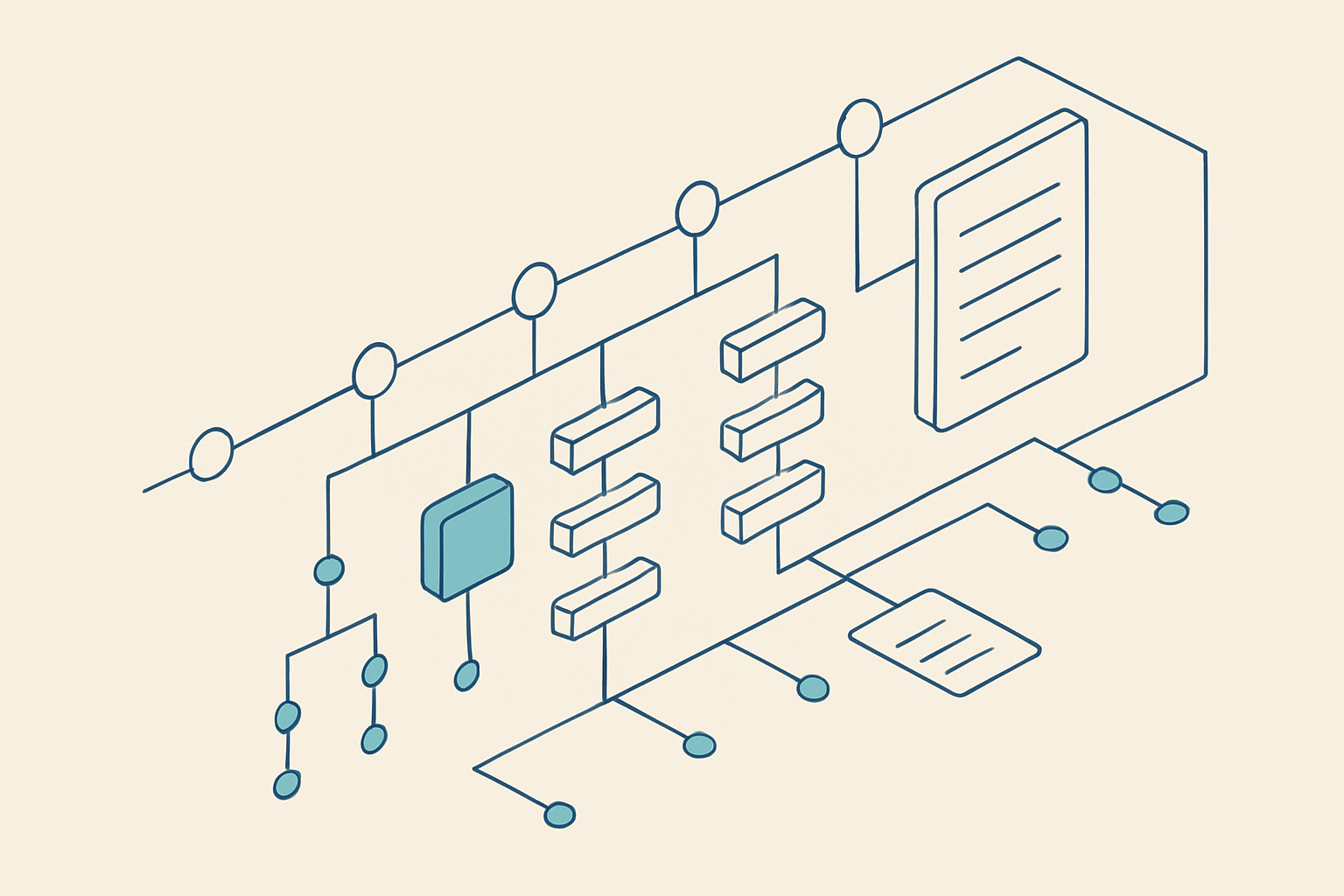
We look at this stack as four systems, not one. First is identity and consent. Second is ingestion and normalization. Third is clinical intelligence. Fourth is the product surface that turns data into action. Most teams spend too much time on the third layer and too little on the first two. That is where medical apps break in production.
When our team builds healthcare software, we see the same failure mode over and over: engineers assume the source data is “clean enough,” then discover that medication lists differ by encounter, lab codes have local variation, and problem lists carry stale diagnoses. Apple Health Records does not remove that complexity. It makes the complexity visible earlier, which is exactly what you want during product design.
Architecture Patterns That Actually Work
| Approach | How it works | Best fit |
|---|---|---|
| Direct Apple Health Records ingestion | ✓ Pull structured records into a mobile or backend sync service, then map FHIR R4 resources into your canonical model | Consumer apps that need fast onboarding and user-approved clinical context |
| Hybrid patient + device fusion | ✓ Combine Apple Health Records with Apple HealthKit, wearables, and questionnaire data in a unified event stream | AI coaching, chronic care, post-discharge monitoring |
| Clinical AI on top of normalized records | ✓ Build a feature store from labs, meds, encounters, and notes, then run summarization or risk models over it | Triage, care navigation, symptom reasoning, prep for virtual visits |
| Naive PDF or screen-scrape workflow | ✗ Treat portal exports and user-uploaded PDFs as the source of truth | Prototype only; fails at scale |
Three Technical Layers Behind the Next Generation of AI Health Apps
1. Consent and identity. Apple gives you a user-mediated access mechanism, but your backend still needs to know who the person is, how long the token is valid, and how to revoke access cleanly. This is where serious teams build explicit consent state, connection expiry handling, and per-source provenance tags. If your product cannot answer “where did this diabetes diagnosis come from?” you are not ready to automate clinical recommendations.
2. Normalization and clinical mapping. The real lift is mapping heterogeneous FHIR R4 resources into a stable internal model. That means collapsing duplicate medications, preserving encounter timestamps, reconciling lab units, and distinguishing active problems from historical ones. We have built integrations where the hardest part was not the initial connection — it was deciding what to do when one health system returns five years of encounter history and another returns only the last 90 days.
3. AI reasoning with guardrails. Consumer AI health products need retrieval-augmented generation, not free-form guessing. The model should answer only from grounded patient data, cite the latest source event, and defer when confidence is low. The best apps use an orchestration layer that routes questions to summary, classification, risk scoring, or “ask the user” paths instead of assuming one LLM prompt can do everything.
AST has spent 8+ years building healthcare software where data quality cannot be hand-waved away. In one deployment serving 160+ respiratory care facilities, the lesson was simple: if the source-of-truth changes underneath your model, the product must fail safely. That same principle applies here. A consumer AI app is only as good as its provenance layer.
We have also seen the gap between prototype and production in EMR-connected products. Teams can demo a slick patient summary in a week, but production requires retry logic, account re-linking, resource versioning, and test coverage for every weird blue-sky edge case the demo never touched. That is the difference between a feature and a platform.
AST’s Decision Framework for Apple Health Records Products
- Start with one user journey. Pick a narrow job to be done: medication reconciliation, lab trend explanation, post-discharge coaching, or prep for an appointment. Do not build a general-purpose health brain first.
- Map the minimum clinical dataset. Identify which FHIR R4 resources you actually need: Observation, MedicationRequest, Condition, Encounter, and possibly DocumentReference. Leave the rest out until the workflow proves value.
- Design provenance into the data model. Every field should know its source system, timestamp, scope, and confidence level. Without provenance, AI output will eventually become untrustworthy.
- Separate retrieval from generation. Build explicit retrieval and summarization services, then add the LLM on top. Do not let the model infer from unverified text blobs.
- Plan for failure states. Token expiry, partial records, duplicate lab panels, and stale problem lists are normal. The product has to explain those conditions to the user instead of hiding them.
AST and the Engineering Reality Behind These Apps
AST builds the kind of infrastructure these products need: secure cloud backends, clinical data pipelines, and healthcare software teams that can own delivery end-to-end. We are not a body shop. Our integrated pods include developers, QA, DevOps, and product leadership so the data model, API behavior, and release process stay aligned from day one.
That matters for Apple Health Records projects because the architecture is cross-disciplinary by default. Mobile, backend, clinical logic, and compliance all collide in the same release train. AST’s pod model is built for that collision. We have seen too many teams let one discipline ship ahead of the others, only to spend the next quarter untangling it.
| Build choice | What you get | Risk |
|---|---|---|
| In-house team only | Full control over product direction | Slow hiring, uneven healthcare depth, fragile delivery |
| Staff augmentation | Extra hands | No real ownership, knowledge stays fragmented |
| AST integrated pod | Dedicated team that owns build, QA, and release | Requires clear product ownership from your side, which is the right tradeoff |
FAQ About Apple Health Records, FHIR, and AST
Building an AI Health App on Apple Health Records?
If you are trying to turn patient-approved clinical data into a product that actually feels trustworthy, we can help you design the architecture before you spend months rebuilding it later. Book a free 15-minute discovery call — no pitch, just straight answers from engineers who have done this.


Comments
Comments are warming up. Live, no-sign-in discussion will appear here shortly.
Have a question now? Email info@allstartech.net.