
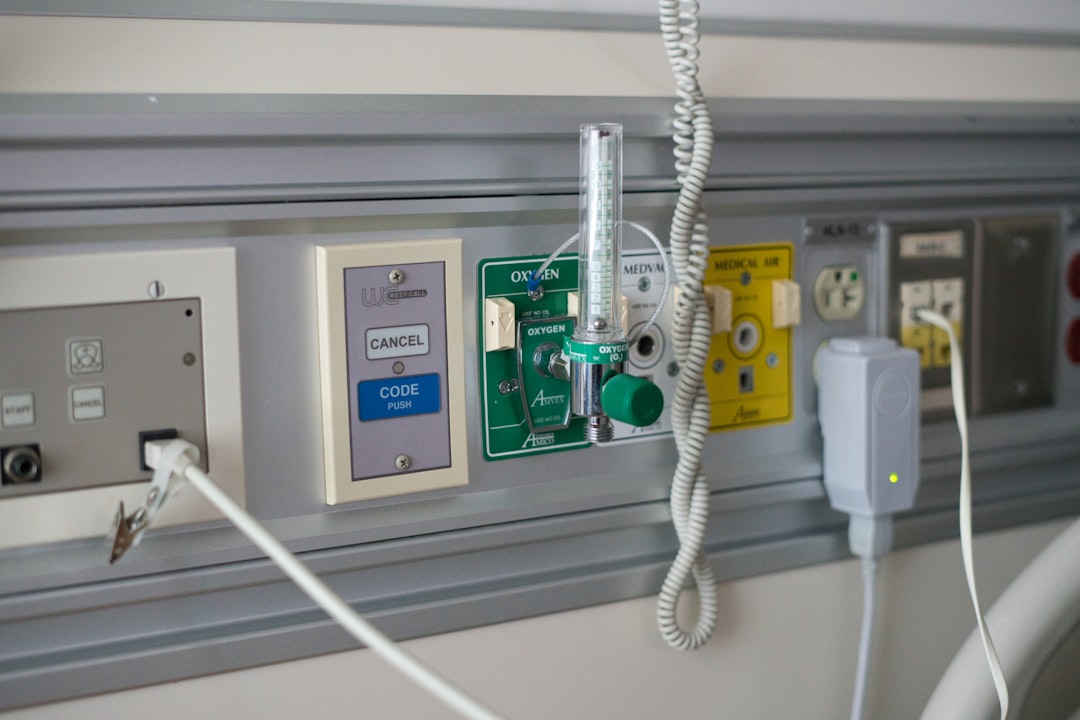
Why health systems are standing up AI governance boards
UCSF, Kaiser, and other major systems are asking the same question: if a model influences care, who owns the risk when it is wrong? That is not an academic question. It is a liability question, a safety question, and a procurement question. Clinical AI now shows up in documentation, triage, inbox management, utilization review, coding, population health, and discharge workflows. Once it moves into a patient-facing or clinician-facing decision path, the system needs a board that can approve, monitor, and retire it with evidence.
From the buyer’s side, the problem is not whether AI exists. It is how to control it without blocking the team that is trying to ship value. Most IT and clinical leaders already know the old playbook: security review, architecture review, legal review, and then a spreadsheet that dies in someone’s inbox. AI governance fails for the same reason most healthcare software reviews fail — no operational owner, no audit trail, and no production telemetry. If you cannot answer what the model saw, what the model returned, and whether a human overrode it, you cannot defend it.
What a real AI governance board actually governs
A serious board is not just clinicians and executives talking about ethics. It is a cross-functional control group with authority over model intake, risk classification, validation, deployment, monitoring, and change management. In practice, the board should include clinical leadership, compliance, security, legal, data science, product, and engineering. The group sets policy, but the system must enforce it.
The governance scope usually breaks into four layers:
- Use-case risk: Does the AI touch diagnosis, triage, ordering, documentation, revenue, or patient communication?
- Model risk: Is the model deterministic, machine learning-based, or an LLM with probabilistic output?
- Workflow risk: Is the output advisory, auto-executed, or used as a default recommendation?
- Operational risk: Can we monitor drift, override behavior, access logs, and failure modes?
That distinction matters because the guardrails are different. A prior-authorization summarization tool and a sepsis alert do not deserve the same approval path. One is an administrative accelerator. The other can change care behavior in real time. Health systems that miss this distinction either over-control low-risk tools or under-control high-risk ones.
Three architecture patterns for AI governance
There is no single governance architecture, but there are patterns that work. The goal is to make approval and monitoring part of the platform, not an afterthought.
| Pattern | Best for | Tradeoff |
|---|---|---|
| Central review board with manual intake | Early-stage programs with few use cases | ✓ Simple to launch | ✗ Slow, hard to scale |
| Policy-as-code governance layer | Teams with multiple production models | ✓ Enforceable controls | ✗ Requires platform maturity |
| Embedded federated governance | Large systems with many service lines | ✓ Fast local decisions | ✗ Harder to standardize |
| Model registry plus workflow auditing | Clinical AI in production | ✓ Strong traceability | ✗ Needs disciplined instrumentation |
1) Central review board with manual intake
This is the starting point for most systems. Teams submit a use case, data flow diagram, model summary, and risk assessment. The board reviews the package and approves, rejects, or requests changes. It works when there are few use cases and the organization needs common language. It breaks when every request has to wait two weeks for a meeting.
2) Policy-as-code governance layer
This is where governance becomes software. Risk thresholds, required fields, logging requirements, and deployment checks are encoded in rules. For example, an LLM that touches patient messaging cannot deploy unless it has human review, prompt logging, output retention, and a rollback mechanism. This is the model that scales, because it stops relying on memory and slide decks.
3) Federated governance with central policy
Large health systems need some local autonomy. A radiology AI tool, a revenue cycle abstraction tool, and a care management summarizer may need different reviewers. The central team sets the controls; each domain team runs intake and validation locally. This is usually the only workable approach when the portfolio gets broad.
AST’s view: governance has to be operational, not ceremonial
We have seen this pattern across healthcare software work: the organizations that succeed do not treat AI governance as a compliance committee. They treat it like change control for clinical decision support. When our team built production clinical software serving 160+ respiratory care facilities, the lesson was simple: if you cannot track who changed what, when, and why, your safety process will collapse the first time something breaks.
We have also seen that the hardest part is not model evaluation. It is evidence collection. Teams can usually tell you the AUC, the precision, or the summary quality. What they cannot always produce is the exact prompt version, the source data snapshot, the approval log, and the clinician override record. That is the gap AST closes with our pod model: product, engineering, QA, and DevOps work as one unit so the audit trail is built into the release process.
For AI governance, that means a few non-negotiables: immutable logging for each inference, environment separation between test and production, controlled access to training and validation data, and a clear incident path when model behavior changes. We do this work in HIPAA-regulated environments, so we are used to closing the loop between policy language and technical enforcement.
The decision framework for getting governance right
- Classify the use case Separate administrative automation, clinical support, and autonomous decisioning. The higher the clinical impact, the stricter the approval path.
- Define the evidence package Require intended use, data provenance, validation results, monitoring plan, rollback plan, and owner. No package, no deployment.
- Choose the control mechanism Manual review, policy-as-code, or federated governance should match the scale of your portfolio and maturity of your platform.
- Instrument the workflow Log inputs, outputs, prompts, user overrides, model versions, and approvals in a way the board can actually audit.
- Set review triggers Re-review when the model version changes, data sources change, metrics drift, or the clinical workflow changes.
HIPAA SOC 2 Audit Trails Clinical Risk are not check-the-box labels here; they are the operating conditions for clinical AI that touches patient care. If your stack cannot prove access control, retention, and traceability, the governance board will be stuck in theory.
What CTOs should demand before approving clinical AI
CTOs should not ask, “Is the model accurate?” first. They should ask, “Can we govern it in production?” That means five concrete questions: Can we trace every output? Can we disable it quickly? Can we separate test and production data? Can clinicians override it cleanly? Can we explain the decision path to legal or compliance after the fact?
Health systems that adopt this posture are not anti-AI. They are pro-accountability. They know the real risk is not experimentation; it is unowned production behavior. The board should exist to make safe production possible, not to stall innovation until everyone is comfortable.
Need an AI Governance Board That Can Actually Audit Clinical AI?
If you are standing up clinical AI oversight and need the technical controls to match the policy, our team has built healthcare software where auditability, rollback, and release discipline are part of the product — not a separate paperwork exercise. Book a free 15-minute discovery call — no pitch, just straight answers from engineers who have done this.


Comments
Comments are warming up. Live, no-sign-in discussion will appear here shortly.
Have a question now? Email info@allstartech.net.