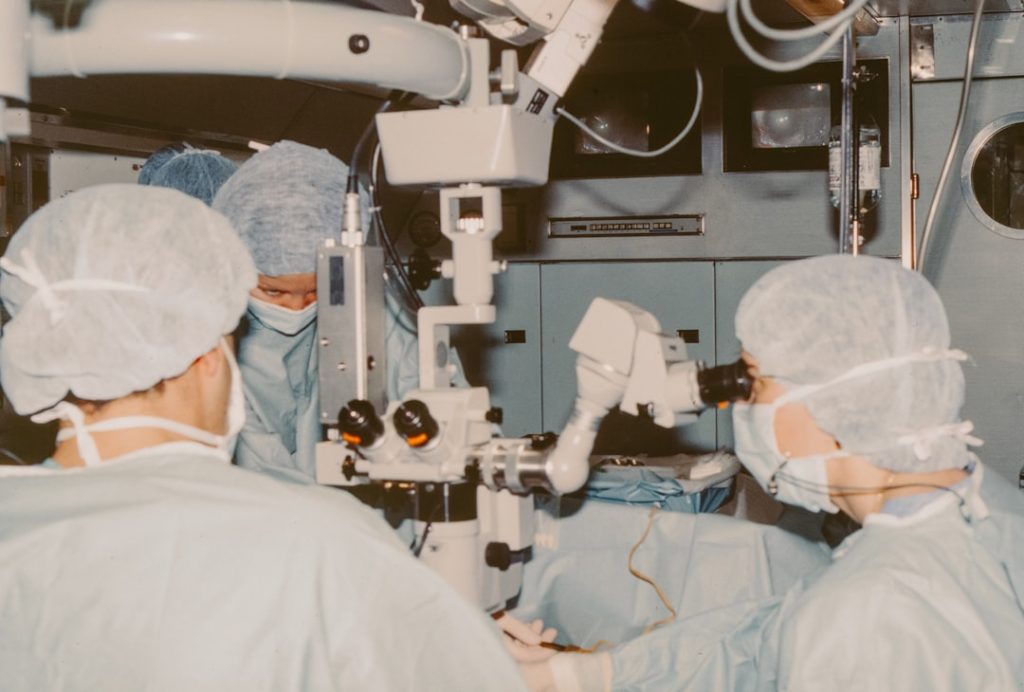
NVIDIA’s Physical AI Signal Is Bigger Than a Robot Demo
Most healthcare robotics programs fail for the same reason: the model is good in a lab and brittle in a real facility. Lighting changes. Gloves occlude hands. Instruments disappear behind tissue. Floors are busy. Humans do not follow scripts. NVIDIA’s physical AI platform, backed by Open-H’s 700+ hours of surgical data, Cosmos-H, and GR00T-H, is a sign that the industry is finally building around those constraints instead of ignoring them.
From the buyer’s side, the real problem is not “can we use robotics?” It is “can we use robotics without creating a maintenance nightmare, a safety liability, and a one-off integration project that dies after pilot one?” That is the bar for hospital operators, surgical robotics vendors, and automation teams inside provider systems. If the stack cannot survive ambient variability, workflow drift, and clinical governance, it will not scale.
What the Buyer Actually Needs to Solve
The procurement conversation usually starts with labor shortage or throughput pressure, but the technical requirements are more specific. Healthcare robotics needs to perceive sterile and non-sterile environments, understand task state, execute safely around people, and provide traceability when something goes wrong. That means model performance alone is not enough. You need MLOps, observability, safety controls, and a deployment pattern that can pass clinical and security review.
We have seen the same pattern in clinical AI systems and ambient documentation workflows: the first version gets attention because the demo is clean, then the operational burden shows up in week three. Our team has built systems where the model is only one piece of the stack. The real work is around exception handling, rollback logic, auditability, and making sure the workflow still works when the network is slow or the operator is distracted.
Three questions to ask before funding a robotics program
- What exact workflow are we automating: prep, navigation, manipulation, documentation, or post-op handling?
- What is the human override path, and how fast can an operator take control?
- What telemetry will prove the system is safe, useful, and cost-effective after deployment?
AST Comparison: Three Practical Healthcare Robotics Architectures
There are three serious ways to build on a physical AI stack like NVIDIA’s. Each has different tradeoffs in latency, control, and regulatory burden.
| Approach | Best Fit | Tradeoff |
|---|---|---|
| Edge-first robot policy stack | ✓ Low-latency manipulation and navigation in OR or procedure rooms | Requires tight hardware integration and on-device optimization |
| Foundation model with constrained skills | ✓ Faster prototyping for picking, setup, and standardized task execution | Needs hard guardrails to avoid unpredictable behaviors |
| Human-in-the-loop orchestration layer | ✓ Regulated environments where staff must approve key steps | Slower throughput, but far easier to validate and deploy |
| Pure autonomous general-purpose robot | ✗ Rarely justified in live healthcare operations today | Highest safety and validation burden with weakest near-term ROI |
The right answer is usually a hybrid. Use an edge policy for time-sensitive control, a foundation model for perception and task suggestion, and a workflow engine for approvals and logging. That stack is boring on paper and far more deployable in practice. It also lets teams scope the automation to one narrow clinical job instead of pretending they are shipping a fully autonomous hospital.
Where Open-H, Cosmos-H, and GR00T-H fit
Open-H is the data layer signal: surgical video and annotation matter because healthcare tasks are visually complex and context-heavy. Cosmos-H points to world-model behavior: the system needs a representation of state, not just frame-by-frame classification. GR00T-H suggests task execution at the policy level, where the model can translate perception into action in a controlled domain.
That is a meaningful shift. The old robotics stack treated perception, planning, and action like separate projects. Physical AI collapses those layers, which is exactly why governance becomes more important, not less.
AST’s View: What Will Actually Scale in Healthcare
If you are a founder or CTO, the first scalable use cases are not the flashy ones. They are the workflows with high repetition, low ambiguity, and clear success criteria: sterile supply handling, post-op logistics, pharmacy movement, tray preparation, room turnover support, and assistive task execution in constrained environments. Surgical assistance is compelling, but it carries a much heavier safety and validation burden.
When our team built clinical software for a 160+ facility respiratory care network, the lesson was constant: adoption comes from operational reliability, not model novelty. The same is true here. Robotics wins when the system reduces staff friction, gives supervisors confidence, and stays observable under pressure.
AST’s operating model for physical AI builds
AST’s integrated pod model is built for this kind of work. We do not split model engineering, application logic, and deployment into disconnected vendors. Our team ships the workflow, the cloud infrastructure, the safety hooks, and the release process together. That matters because physical AI programs fail when the robot, the model, and the operator console are owned by different teams that do not share the same definition of done.
We have seen the same thing in ambient documentation and clinical automation products: if release management and observability are weak, every pilot becomes a custom support engagement. The product looks advanced, but operations carry the debt.
Decision Framework for Physical AI in Healthcare
- Pick one bounded workflow Choose a task with stable inputs, repeatable motion, and clear operational value. Do not start with full autonomy.
- Define the safety envelope Specify approval steps, stop conditions, exception paths, and human override controls before model training begins.
- Instrument the system Track latency, intervention rate, task completion, recovery time, and incident logging from the first pilot.
- Integrate with operations Connect the robot to scheduling, room readiness, inventory, and maintenance workflows so it fits the site, not just the demo.
- Decide on scale criteria Expand only after one site proves repeatability, supportability, and tangible ROI.
FAQ
Need a Robotics Stack That Can Survive Real Clinical Operations?
We help healthcare teams turn physical AI from a prototype into a controlled, supportable system. If you are evaluating NVIDIA’s stack, we can help you scope the workflow, architecture, and rollout path without the usual pilot chaos. Book a free 15-minute discovery call — no pitch, just straight answers from engineers who have done this.