The Real Problem: Clinician Burnout and Broken Documentation Workflows
Every founder building ambient documentation starts with the same pitch: “We’ll give clinicians their time back.” The buyer’s reality is more complicated.
CMIOs and VPs of Clinical Informatics care about three things: note quality, reimbursement integrity, and medico-legal defensibility. If your system saves five minutes but introduces risk, it will be turned off.
We’ve seen this firsthand. When our team built an ambient documentation pipeline for a multi-state respiratory care organization serving 160+ facilities, the hardest problem wasn’t speech-to-text accuracy. It was building enough structure and validation into the output so clinical leadership trusted the notes enough to deploy at scale.
Ambient systems fail when they’re treated as audio tools instead of clinical infrastructure.
Four Architectural Approaches to Ambient Documentation
There are four dominant patterns we evaluate when helping healthcare teams design or refactor these systems.
| Approach | Scalability | Clinical Safety |
|---|---|---|
| 1. Raw Speech-to-Text + Template Fill | ✓ | ✗ |
| 2. End-to-End LLM Summarization | ✓ | ✗ |
| 3. Structured NLP + LLM Hybrid | ✓ | ✓ |
| 4. Human-in-the-Loop Editing Layer | ✗ | ✓ |
1. Raw Speech-to-Text + Templates
This model uses a medical-tuned ASR engine followed by deterministic mapping to SOAP templates. It’s simple and relatively cheap.
The issue: it does not understand clinical intent. If the physician says, “Rule out pneumonia,” naïve extraction systems often encode pneumonia as an active diagnosis.
This approach works for structured visit types with rigid scripts. It breaks in real-world multi-problem encounters.
2. End-to-End LLM Summarization
Here, full transcripts are fed into a large language model fine-tuned on clinical notes. The model generates a formatted progress note directly.
This is fast to prototype and demos beautifully. It is also where hallucination risk shows up. Without guardrails, models introduce details that were never spoken — especially around medication adjustments and exam findings.
Under HIPAA, every hallucinated phrase is a liability.
3. Structured Clinical NLP + LLM Hybrid (The Practical Model)
This is the architecture we recommend most often.
Pipeline:
- Audio preprocessing (noise suppression, speaker diarization)
- Domain-tuned ASR
- Clinical NER (problems, meds, labs, procedures, temporality)
- Event grounding layer (negation detection, historical vs current)
- LLM for narrative synthesis constrained by structured outputs
- Validation rules before clinician review
The key is forcing the LLM to generate from extracted structured entities instead of from raw transcript alone. We use prompt constraints and structured output schemas so unsupported clinical claims can’t appear in the final note.
4. Human-in-the-Loop Editing Layer
This isn’t optional at early stages. Even high-performing systems require clinician confirmation.
The engineering decision is whether that review step happens inside your product UI or inside the EHR workflow. The latter requires deeper workflow design but dramatically improves adoption.
System Metrics That Actually Matter
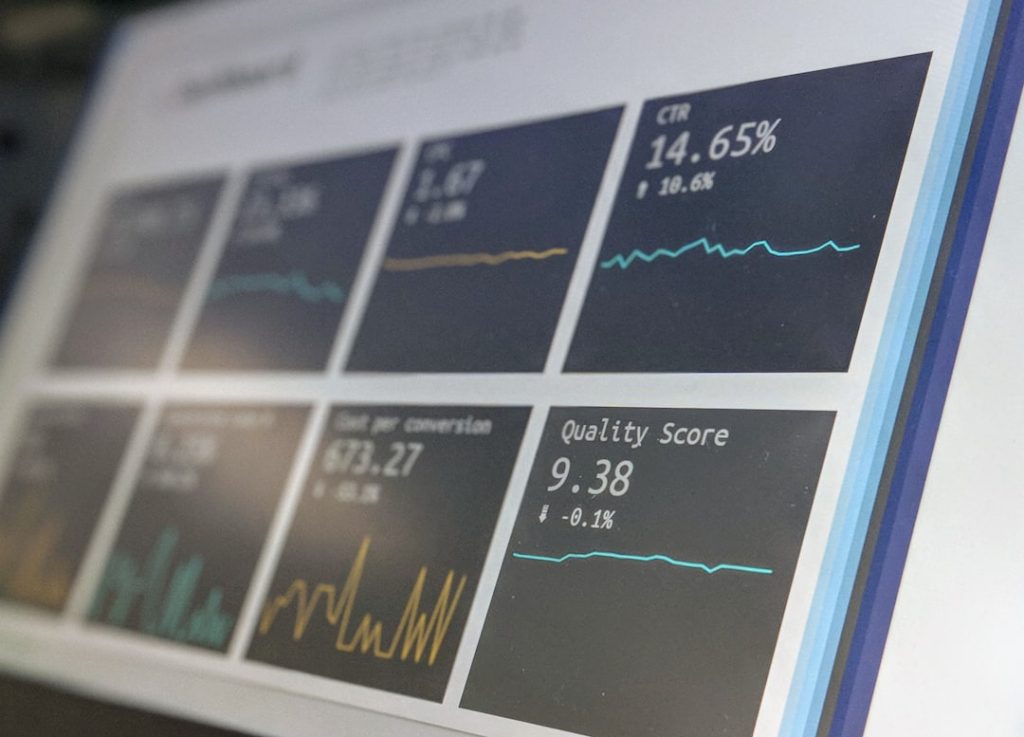
Notice what’s not listed: “transcript accuracy.” Buyers increasingly care more about clinical validity rate — the percentage of generated notes that require zero factual corrections.
In our deployments, getting from 80% to 92% clinical validity required less model tuning and more pipeline control — negation detection, medication normalization, and strict schema validation.
How AST Architects Ambient Systems That Survive Real Deployment
At AST, we don’t treat ambient AI as a feature. We treat it as a regulated subsystem.
Our pod teams design these systems with:
- Isolated audio ingestion services in SOC 2 and HIPAA-aligned environments
- Domain-adapted NLP layers with explicit negation and temporality modeling
- Guarded LLM prompting with structured JSON outputs
- Immutable audit logs of transcript → entities → note
- Clinician-side edit tracking for continuous model tuning
When we implemented ambient capture for long-term respiratory therapists, the most impactful move wasn’t a bigger model. It was adding a reconciliation layer that compared extracted medications against the active med list before synthesis. That single addition cut downstream correction time significantly.
A Practical Decision Framework
- Define Risk Tolerance. Are you supporting primary care, specialty care, or post-acute documentation? Higher acuity means stricter extraction-validation pipelines.
- Start With Structured Extraction. Build entity and event grounding before narrative generation.
- Instrument Clinical Validity. Measure factual correction rates, not just transcription accuracy.
- Design Review Into Workflow. Don’t bolt on approval screens — embed them naturally into how clinicians already chart.
- Plan for Continuous Tuning. Production feedback loops must drive model updates every few weeks, especially early on.
Common Failure Modes We See
- Relying solely on foundation LLMs without clinical guardrails
- No structured representation of extracted clinical entities
- Ignoring audio environment variability in outpatient settings
- Deploying without defined medico-legal policy alignment
We’ve integrated ambient systems into broader clinical platforms, and the consistent pattern is this: technical performance gets you into a pilot. Workflow trust gets you scaled.
FAQ
Building an Ambient Documentation System That Clinicians Will Actually Use?
If you’re designing or scaling an ambient AI product, we can sanity-check your architecture, guardrails, and deployment plan. Our team has built and integrated real clinical AI systems — not demos. Book a free 15-minute discovery call — no pitch, just straight answers from engineers who have done this.