The Real Problem: AI Startups Built Like Demos, Not Systems
From the buyer’s perspective—whether that’s a healthcare IT leader, SaaS founder, or enterprise CTO—the question isn’t “Does your model work?” It’s: Will this hold up when 500 users hit it at once? When compliance asks for audit trails? When costs triple because token usage spikes?
We’ve reviewed multiple AI products that impressed investors in demos but fell apart in production. The pattern is consistent: a thin backend that calls a single LLM API, no evaluation harness, no cost controls, no caching strategy, and zero observability beyond basic logs.
AI systems are distributed systems. If you don’t design them that way from the start, scaling becomes a rewrite—not an upgrade.
Four Architecture Mistakes We See Repeatedly
1. Single-Model Dependency (LLM-as-a-Backend)
The simplest architecture—frontend → backend → one LLM provider—works for prototypes. It breaks under production pressure.
Issues appear quickly:
- No fallback strategy
- No routing based on query type
- No cost-tier segmentation
- No protection against provider outages
Independent deployment of reasoning layers, embedding services (vector database), and workflow orchestration is critical. Otherwise your entire product becomes tightly coupled to one model’s latency and pricing curve.
2. No Structured Evaluation Framework
Many startups rely on anecdotal testing. A few manual prompts. A QA spreadsheet. That’s not evaluation.
Production AI requires:
- Golden datasets
- Automated regression testing
- Prompt version control
- Output scoring pipelines
- Drift detection
Whether you’re building on RAG or agentic workflows, without systematic testing your updates will quietly degrade performance.
At AST, when we built multi-step LLM orchestration systems for enterprise SaaS platforms, we implemented evaluation pipelines before expanding feature sets. It added 2–3 weeks upfront but prevented months of post-release firefighting.
3. Ignoring Latency and Cost Budgets
LLMs are not free. They’re variable-cost infrastructure.
Common failure patterns include:
- No token accounting at request level
- No caching of embeddings
- No streaming for fast perceived latency
- No queue management for concurrency spikes
A 1.8-second response at demo scale becomes 6–8 seconds under load without proper connection pooling and async processing.
4. Treating RAG as a Feature, Not a Retrieval System
Retrieval-Augmented Generation isn’t just “add a vector DB.” Proper RAG requires:
- Chunking strategy tuned to domain context
- Embedding versioning
- Re-indexing strategies
- Metadata filtering
- Observability on retrieval relevance
We’ve seen startups dump documents into a embeddings pipeline and hope semantic search solves everything. Without chunk validation and retrieval scoring, hallucinations increase—not decrease.
Architecture Patterns That Actually Scale
| Approach | Strength | Risk If Ignored |
|---|---|---|
| Multi-Model Routing Layer | Cost optimization + resilience | Vendor lock-in & failure cascade |
| Event-Driven Orchestration | Scales multi-step AI workflows | Tight coupling & brittle flows |
| Evaluation + Telemetry Pipeline | Prevents silent regressions | Quality decay over time |
| Hybrid Retrieval Stack | Higher answer precision | RAG hallucinations & poor recall |
Multi-Model Routing
Introduce an abstraction layer that dynamically selects models based on task complexity. Simple classification queries hit lightweight models; reasoning tasks use larger models. This reduces cost dramatically while improving uptime.
Event-Driven AI Orchestration
Instead of monolithic prompt chains, use async workflows with message queues and state persistence. This is critical for agent-based systems built on LangChain-style frameworks or custom orchestration layers.
First-Class Observability
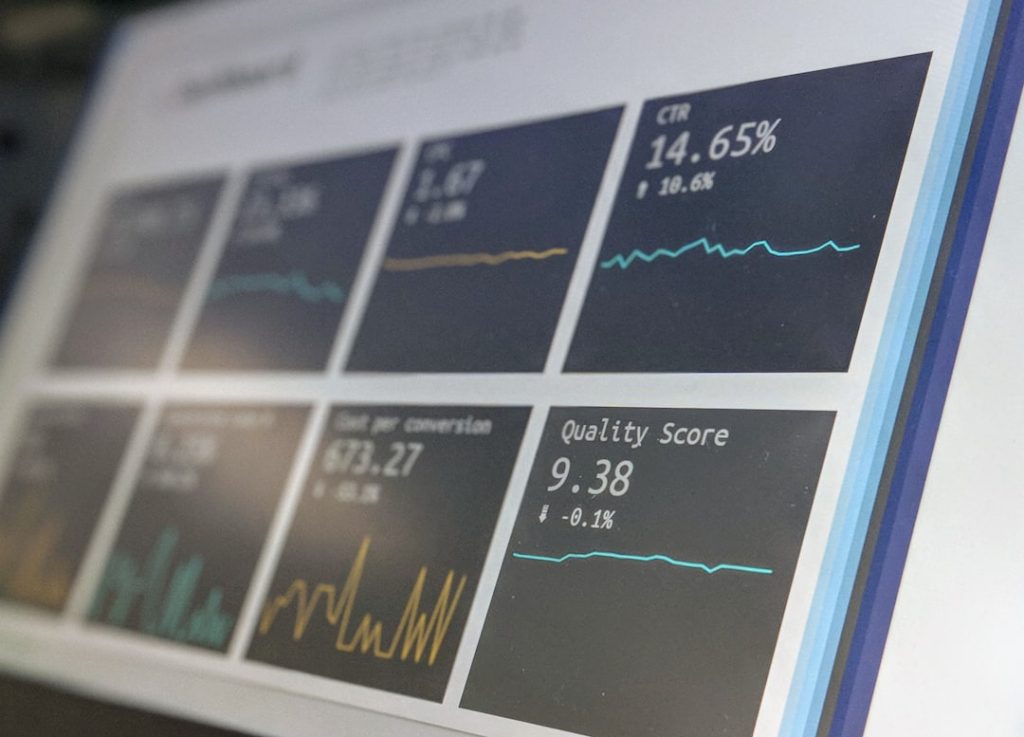
Track prompt versions, embedding versions, retrieval scores, latency percentiles, and token spend per tenant. AI without telemetry is guesswork.
How AST Designs AI Architectures That Survive Scale
At AST, we treat AI systems as production SaaS platforms—not research experiments. Our AI & LLM engineering teams embed within product orgs as integrated pods, combining backend engineers, DevOps, and QA from day one.
In one engagement scaling an AI-powered workflow platform, we introduced model routing, token-level analytics, and a retrieval observability dashboard. The result: 42% reduction in inference cost and 30% latency improvement under peak concurrency.
This architecture discipline is why our AI systems operate reliably inside production SaaS platforms serving regulated and enterprise users.
AST’s Decision Framework for AI Startup Founders
- Define Your Production Constraints Establish hard numbers for latency, concurrency, cost per request, and accuracy targets.
- Design for Modularity Separate model provider, retrieval layer, orchestration engine, and evaluation suite.
- Instrument Everything Implement tracing, token tracking, and regression scoring from day one.
- Stress-Test Under Load Simulate 5–10x projected usage before enterprise rollout.
- Plan For Model Evolution Assume models will change quarterly. Architect to swap them safely.
Architecting an AI Product That Won’t Collapse at Scale?
If your AI product is preparing for real revenue and real traffic, architecture discipline becomes survival. Our AI & LLM engineering pods have built and scaled production-grade systems that balance performance, cost, and reliability. Book a free 15-minute discovery call — no pitch, just straight answers from engineers who have done this.